

Nutrition counselling is a collaborative, evidence-based process in which a trained health professional helps you assess your current eating patterns, identify what needs to change, and build sustainable habits to meet a specific health or medical goal. The NCI defines nutritional counselling as a process by which a health professional helps people make healthy food choices and form healthy eating habits. In the UK, your first move is to check whether the practitioner you are considering is registered with the Health and Care Professions Council (HCPC) if they are a dietitian, or with the Association for Nutrition (AfN) if they call themselves a nutritionist. The British Dietetic Association (BDA) is the professional body for dietitians and a reliable starting point for finding qualified practitioners.
When you need a dietitian (HCPC-registered):
- You have a diagnosed medical condition such as type 2 diabetes, inflammatory bowel disease, or an eating disorder
- You are managing a condition that requires clinical assessment, lab review, or medical nutrition therapy
- You are pregnant and have a high-risk nutritional concern
- Your GP has referred you for specialist dietary support
When a registered nutritionist (AfN) may be appropriate:
- You want evidence-based support for general wellness, weight management, or sports performance without a clinical diagnosis
- You are looking for lifestyle-focused dietary guidance and behaviour change support
Pro Tip: Before booking any appointment, ask the practitioner for their registration number and check it directly on the HCPC or AfN public register. A legitimate professional will give you this without hesitation.
Key takeaways
Nutrition counselling works best when delivered by a correctly registered professional, matched to the clinical complexity of your situation, and supported by realistic expectations about timescales and outcomes.
| Point | Details |
|---|---|
| Check registration first | Verify HCPC registration for dietitians and AfN registration for nutritionists before booking any appointment. |
| NHS is free with referral | NHS dietetic services cost nothing with a GP referral; private care is faster but fees vary by location and specialism. |
| Private tests need clinical interpretation | Microbiome, intolerance, and genetic tests can add information but should not replace established dietary principles or clinical assessment. |
| Realistic timescales matter | Behaviour change typically takes several weeks; metabolic markers improve over a few months of sustained dietary change. |
| Guidemetherapy for the mental-health side | Where eating behaviour is emotionally driven, Guidemetherapy matches you with a therapist to work alongside your nutrition care. |
Table of Contents
- What is nutrition counselling and how does it differ from general diet advice?
- Who provides nutrition counselling in the UK and how to check credentials
- What happens in a nutrition counselling session?
- How nutrition counselling helps with eating disorders, diabetes, IBS, PCOS and more
- Private tests and precision nutrition: what they can and cannot tell you
- How to find and choose a nutrition counsellor in the UK
- What research says about the effectiveness of nutrition counselling
- Access routes, referral pathways and typical costs in the UK
- When nutrition counselling isn't enough: safety and red flags
- How nutrition counselling works alongside psychological therapy
- What good nutrition counselling actually looks like
- Finding the right mental-health support alongside nutrition care
- Sources
What is nutrition counselling and how does it differ from general diet advice?
Nutrition counselling is not a meal plan handed to you after a ten-minute chat. It is a structured, ongoing process that begins with a thorough assessment of your health history, current intake, lifestyle, and goals, then moves into collaborative planning and regular review. The practitioner works with you, not at you, adjusting recommendations as your circumstances change.
The formal definition is worth anchoring to:
Medical nutrition therapy sits at the clinical end of the spectrum. It is delivered by HCPC-registered dietitians and involves diagnosing nutrition-related problems, prescribing therapeutic diets, and monitoring clinical outcomes. This is what you receive when a gastroenterologist refers you for low-FODMAP dietary management of IBS, or when a diabetes team includes a dietitian in your care plan.
Lifestyle nutrition coaching, by contrast, focuses on behaviour change and general health promotion. It does not involve clinical diagnosis and is typically delivered by registered nutritionists or health coaches. The goals here tend to be improving energy, managing weight, or supporting athletic performance.
Common goals across both levels include:
- Symptom control for chronic conditions (IBS, diabetes, PCOS)
- Nutritional adequacy and correcting deficiencies
- Eating disorder recovery and normalising food relationships
- Weight management grounded in behaviour change rather than restriction
- Sports performance and recovery nutrition
The distinction matters because the wrong level of support for a medical condition can delay proper treatment. Someone managing coeliac disease or anorexia nervosa needs an HCPC-registered dietitian, not a wellness coach.
Who provides nutrition counselling in the UK and how to check credentials
The title "dietitian" is legally protected in the UK. Using it without HCPC registration is a criminal offence. "Nutritionist," however, is not protected, which means anyone can technically use it regardless of their training. This is the single most important thing to understand before booking.
The BDA explains clearly that HCPC-registered dietitians are the appropriate professionals for managing medical nutritional conditions, while AfN-registered nutritionists are appropriate for non-clinical health promotion. NHS dietetic services are free with a GP referral and prioritise people with specific medical needs; private care is faster and does not require a referral.
How to verify a practitioner:
- Search the HCPC register using the practitioner's name or registration number
- Search the AfN register for Registered Nutritionists (RNutr) or Associate Nutritionists (ANutr)
- Check that they hold professional indemnity insurance
- Confirm they have specific experience with your condition or goal
What each credential means in practice:
- HCPC-registered dietitian: Can diagnose nutrition-related conditions, prescribe therapeutic diets, work within NHS multidisciplinary teams, and manage complex clinical cases
- AfN Registered Nutritionist (RNutr): Has met rigorous competency standards for non-clinical nutrition practice; appropriate for public health, sports, and wellness settings
- AfN Associate Nutritionist (ANutr): Is working towards full registration; appropriate for supervised or lower-complexity work
- BDA membership: Indicates professional engagement and access to continuing development, though BDA membership alone does not replace HCPC registration as the legal requirement
Pro Tip: The AfN register distinguishes between specialisms such as public health, sport and exercise, and animal nutrition. Filtering by specialism when you search saves time and helps you find someone with relevant experience.
The BDA's find a dietitian directory is a reliable starting point for locating HCPC-registered practitioners in your area or working remotely.
What happens in a nutrition counselling session?
The first consultation is rarely about handing you a plan. It is primarily an information-gathering session, and understanding that from the outset helps you arrive prepared rather than disappointed.
Core components of a first appointment:
- Full health history: current and past medical conditions, medications, supplements, family history
- Dietary assessment: typical intake, meal patterns, food preferences, restrictions, and relationship with food
- Lifestyle review: physical activity, sleep, stress levels, and social context around eating
- Goal-setting: what you want to achieve, in what timeframe, and what has or has not worked before
- Red flag screening: symptoms that may indicate an urgent medical referral is needed before dietary changes begin
Common assessment tools:
- A 3-day food diary (often completed before the appointment)
- Anthropometric measurements: weight, height, BMI, waist circumference
- Review of recent blood test results (ferritin, HbA1c, vitamin D, thyroid function, lipids)
- Symptom inventories for conditions such as IBS or disordered eating
- Validated questionnaires for eating behaviour and psychological relationship with food
A typical care timeline runs roughly as follows. After the initial assessment, short-term goals are set for the first four to six weeks. Follow-up appointments, usually every two to four weeks initially, review progress, troubleshoot barriers, and adjust the plan. For complex conditions, care may run for six to twelve months or longer. Package structures vary: some practitioners offer a block of four to six sessions, others work on a rolling monthly basis.
Sessions are available in-person, via video call, or through asynchronous messaging platforms. Telehealth has made access considerably more flexible, particularly for people in rural areas or those with mobility constraints.
Pro Tip: Bring a three-day food diary to your first appointment, covering two weekdays and one weekend day. Include portion sizes, timings, drinks, and any notes on hunger or mood. The more honest and specific it is, the more useful the session will be.

How nutrition counselling helps with eating disorders, diabetes, IBS, PCOS and more
Nutrition counselling is not a single intervention. Its application and the type of professional you need varies significantly depending on the condition.

Eating disorders (anorexia nervosa, bulimia nervosa, binge eating disorder): An HCPC-registered dietitian is required. Nutritional rehabilitation, meal planning, and weight restoration work must sit within a multidisciplinary team that includes psychological therapy, medical monitoring, and often psychiatry. The clinical literature supports dietitian involvement in multidisciplinary eating disorder teams as standard practice. Expect care to span months to years, not weeks.
Type 2 diabetes and insulin resistance: Dietitian-led medical nutrition therapy can meaningfully support blood glucose management, weight loss, and cardiovascular risk reduction. NHS diabetes care pathways typically include dietitian input, though waiting times vary by trust.
IBS and gut health: Low-FODMAP dietary management, delivered by a trained dietitian, has a strong evidence base for reducing IBS symptoms. Self-managing a low-FODMAP diet without professional guidance risks unnecessary restriction and nutritional inadequacy.
PCOS and hormonal concerns: Dietary approaches targeting insulin sensitivity and inflammation are commonly used. An HCPC-registered dietitian with endocrine or women's health experience is the appropriate choice; a nutritionist with relevant AfN registration may also be appropriate for lifestyle-focused support.
Weight management: Sustainable weight management requires behaviour change, not just calorie targets. Dietitian-led programmes that incorporate cognitive behavioural techniques tend to produce more durable results than short-term restriction plans.
Sports nutrition: Registered nutritionists with a sport and exercise specialism (AfN) or dietitians with sports experience are both appropriate. For elite athletes or those with underlying health conditions, an HCPC-registered dietitian is the safer choice.
Promises of rapid transformation, dramatic weight loss in weeks, or "resetting" your metabolism are red flags regardless of the condition. Realistic timescales and measurable, modest goals are what evidence-based practice looks like.
Private tests and precision nutrition: what they can and cannot tell you
Private diagnostic testing is being marketed more widely than ever, from microbiome sequencing kits to food intolerance panels and genetic SNP reports. The appeal is understandable. But the evidence for routine use of most of these tests in the general population remains limited.
Harvard T.H. Chan School of Public Health's Nutrition Source notes that precision nutrition is an emerging field and cautions that personalised tests should be layered onto, not replace, established nutrition principles such as whole foods, adequate fibre, and reduced added sugars. The evidence base for many commercially available tests does not yet support using them as the primary driver of dietary change.
What commonly marketed tests can and cannot tell you:
- Microbiome sequencing: Can describe the composition of your gut bacteria at a point in time. Cannot reliably prescribe a diet, diagnose a condition, or predict long-term health outcomes with current evidence.
- Food intolerance panels (IgG antibody tests): Not clinically validated for diagnosing food intolerance. A positive result does not confirm intolerance; eliminating foods based on these results alone risks nutritional deficiency and unnecessary restriction.
- Genetic/SNP reports: Can identify variants associated with nutrient metabolism (e.g. MTHFR, vitamin D receptor). Cannot tell you definitively what to eat; gene expression is influenced by many factors beyond a single variant.
Before committing to a private test, ask:
- Is this test validated in peer-reviewed clinical literature?
- Who will interpret the results, and are they HCPC-registered or medically qualified?
- What dietary changes will be recommended if results are abnormal, and are those changes evidence-based?
- Is the test provider selling supplements or programmes linked to the results?
For clinical personalisation to add genuine value, results need to be interpreted by a registered clinician who can place them in the context of your full health picture. A test result without clinical interpretation is, at best, incomplete information.
How to find and choose a nutrition counsellor in the UK
Three immediate routes to care:
- NHS referral via your GP: Free, prioritises medical need, and connects you with HCPC-registered dietitians. Ask your GP specifically for a dietitian referral and mention your condition clearly. Waiting times vary by trust and condition.
- Private direct booking: Faster access, self-referral allowed, and a wider choice of specialisms. Use the BDA's find-a-dietitian directory or the AfN register to shortlist practitioners.
- Employer or insurance route: Some private health insurers cover dietitian appointments when linked to a diagnosed condition. Corporate wellness programmes may also fund nutritional support. Check your policy documents or speak to your HR team.
Questions to ask before booking:
- Are you HCPC-registered (for dietitians) or AfN-registered (for nutritionists), and can you share your registration number?
- Do you have experience working with [your specific condition or goal]?
- What does a typical package include, and are there additional costs for tests or supplements?
- How do you measure progress, and how often will we review goals?
- Do you offer telehealth sessions, and how do you handle between-session queries?
Red flags to watch for:
- Promises of rapid or guaranteed results
- Blanket elimination diets recommended without clinical assessment or testing
- Pressure to purchase supplements or proprietary products
- Reluctance to share registration details or professional indemnity information
- No clear plan for what happens if your condition worsens
Booking a therapy appointment in the UK follows a similar process to booking with a nutrition practitioner: check credentials, confirm the service mode, and clarify costs upfront. The same due diligence applies.
Regarding pricing: private fees vary widely depending on the practitioner's experience, location, and specialism. Package structures often include an initial assessment plus a set number of follow-ups, but additional charges for diagnostic tests or supplements are common. Always request a transparent cost breakdown before committing.
What research says about the effectiveness of nutrition counselling
The evidence base for nutrition counselling is genuine but nuanced. Systematic reviews and clinical literature indicate that nutrition interventions can improve outcomes for chronic disease management and some gastrointestinal conditions, but heterogeneity in study methods means individual responses vary considerably.
Randomised and observational studies support dietetic interventions for selected conditions, while noting that clinical improvements are often modest and require sustained follow-up rather than short-term input. This is not a weakness of the field; it reflects the complexity of human behaviour and the long timescales over which dietary change produces measurable physiological results.
What the evidence generally supports:
- Dietitian-led interventions for type 2 diabetes can improve HbA1c and support weight management
- Low-FODMAP dietary management, delivered by a trained dietitian, reduces IBS symptoms in a meaningful proportion of people
- Nutrition support within multidisciplinary eating disorder teams is associated with better outcomes than nutrition support delivered in isolation
- Dietary counselling for cardiovascular risk reduction has a consistent, if modest, effect on lipid profiles and blood pressure
Realistic timescales for measurable change:
- Behaviour change (consistent dietary habits): 8–12 weeks of regular support
- Metabolic markers (HbA1c, lipids): 3–6 months of sustained dietary change
- Symptom relief (IBS, gut symptoms): 4–8 weeks on a structured protocol
- Weight change: gradual and variable; 0.5–1 kg per week is a clinically realistic and sustainable rate
The limitations of the literature are worth acknowledging. Many studies are short-term, use different outcome measures, and involve populations that may not reflect your specific situation. This is precisely why personalised, clinician-led care produces better results than following a generic protocol from a book or website.
Access routes, referral pathways and typical costs in the UK
NHS dietetic services are free at the point of use with a GP referral. They prioritise people with specific medical needs, which means waiting times can be longer for lower-acuity concerns. Private care is faster, does not require a GP referral, and offers a broader choice of specialisms and service modes.
Typical private fee considerations:
- Initial assessments tend to cost more than follow-up sessions
- Location affects pricing: London and major city practitioners typically charge more than those in other regions
- Specialism matters: eating disorder dietitians and those with niche clinical expertise often charge at the higher end
- Package structures (e.g. an assessment plus four follow-ups) may offer better value than individual sessions, but always confirm what is included
- Additional costs for diagnostic tests, supplements, or written reports are common and should be clarified upfront
Private fees vary widely by practitioner, location and package structure; NHS dietetic care is free with referral but has longer wait times.
Insurance and employer routes:
- Some private health insurers (Bupa, AXA Health, Vitality) cover registered dietitian appointments when linked to a diagnosed condition. Check whether your policy requires a GP referral or a specific diagnosis code.
- Employer wellness programmes increasingly include nutritional support. Corporate therapy and wellness services sometimes extend to dietitian access or subsidised private consultations.
How to approach your GP:
Be specific about your symptoms or condition when requesting a referral. Mention the condition by name, describe how it affects your daily life, and ask explicitly for a referral to a dietitian rather than general dietary advice. If your GP declines and you believe a referral is clinically appropriate, you can ask for the reasoning and seek a second opinion.
When nutrition counselling isn't enough: safety and red flags
Some situations require urgent medical attention before any dietary intervention begins. Recognising these is not alarmist; it is a basic safety consideration.
Situations requiring urgent medical review:
- Rapid or unexplained weight loss (more than 5% of body weight in a month without intentional change)
- Signs of severe malnutrition: extreme fatigue, hair loss, fainting, or electrolyte disturbance
- Suicidal ideation or self-harm linked to body image or eating behaviour
- Refeeding risk in someone with a history of very low intake or prolonged restriction
In these situations, contact your GP or, if urgent, NHS 111 or A&E. A nutrition counsellor, however qualified, cannot substitute for emergency medical care.
Red flags in practice to watch for:
- A practitioner who promises to cure a medical condition through diet alone
- Mandatory purchase of expensive proprietary tests or supplements as a condition of treatment
- Blanket elimination diets (removing gluten, dairy, or multiple food groups) recommended without clinical testing or clear rationale
- No discussion of risks, contraindications, or when to seek medical review
- Poor or no communication about what to do if your symptoms worsen
When to escalate:
If you are concerned that a practitioner's advice is causing harm, contact the HCPC (for dietitians) or the AfN (for nutritionists) to raise a concern. Both bodies have formal fitness-to-practise processes. For eating disorders specifically, the NHS eating disorder services and BEAT (the UK's eating disorder charity) can provide urgent signposting to multidisciplinary care.
How nutrition counselling works alongside psychological therapy
For conditions where eating behaviour is driven by emotion, trauma, anxiety, or distorted thinking, nutrition counselling alone is rarely sufficient. Combined nutrition and mental-health care tends to produce better outcomes for eating disorders and emotionally driven eating than either approach delivered in isolation. Clinical literature on multidisciplinary care consistently supports this integrated model for complex presentations.
Common collaborative models:
- Parallel care with shared goals: A dietitian and a therapist work with the same person simultaneously, with agreed treatment goals and regular communication between practitioners
- Sequential care: Psychological stabilisation comes first (e.g. trauma-focused therapy), followed by structured nutritional rehabilitation once the person is ready
- Integrated multidisciplinary teams: Common in NHS eating disorder services, where a dietitian, psychologist, psychiatrist, and GP coordinate care through joint case meetings
What to expect from coordinated care:
- Both practitioners will ask about your goals and may share progress notes (with your consent)
- You may be asked to work on specific tasks between sessions, such as meal planning alongside cognitive exercises
- Progress in one area often supports progress in the other: reducing anxiety around food tends to make dietary change more sustainable
When speaking to a potential practitioner, ask directly: "Do you work alongside therapists or other clinicians, and how do you coordinate care?" A practitioner who works in isolation and does not consider the psychological dimension of eating is offering a narrower service than the evidence supports.
Supportive counselling approaches that address emotional eating, self-worth, and relationship with food can complement the practical work of a dietitian significantly. A therapy navigation platform can help you identify and access the right mental-health support to sit alongside your nutrition care, ensuring both dimensions are addressed by appropriately registered professionals.

What good nutrition counselling actually looks like
There is a version of nutrition counselling that gets talked about a lot, and a version that actually works. The gap between them is worth naming.
Good practice is not dramatic. It does not involve a radical overhaul of everything you eat in week one, a long list of foods to eliminate, or a promise that your symptoms will resolve in a month. What it looks like, in practice, is a practitioner who asks more questions than they answer in the first session, who sets goals that feel achievable rather than aspirational, and who revisits those goals regularly rather than handing you a plan and disappearing.
The relationship between a client and a dietitian or nutritionist matters more than most people expect. Behaviour change is hard, and it is harder when you feel judged or misunderstood. A practitioner who takes time to understand your relationship with food, your cultural context, your schedule, and your history is not being inefficient. They are doing the work that makes change stick.
Realistic pacing is also a clinical issue, not just a preference. Pushing dietary change too fast, particularly for someone with a history of disordered eating or a complex medical condition, can cause harm. The evidence base for gradual, supported change is considerably stronger than the evidence for rapid intervention.
Integrated mental-health support is not an optional extra for people with eating disorders. For anyone whose eating behaviour is shaped by anxiety, low mood, trauma, or stress, addressing the psychological dimension is part of the treatment, not a separate concern to deal with later.
Finding the right mental-health support alongside nutrition care
If you are working through the emotional side of eating, food anxiety, or disordered eating patterns, a registered dietitian addresses the clinical nutrition piece, but the psychological work needs its own specialist. That is where Guidemetherapy can help.
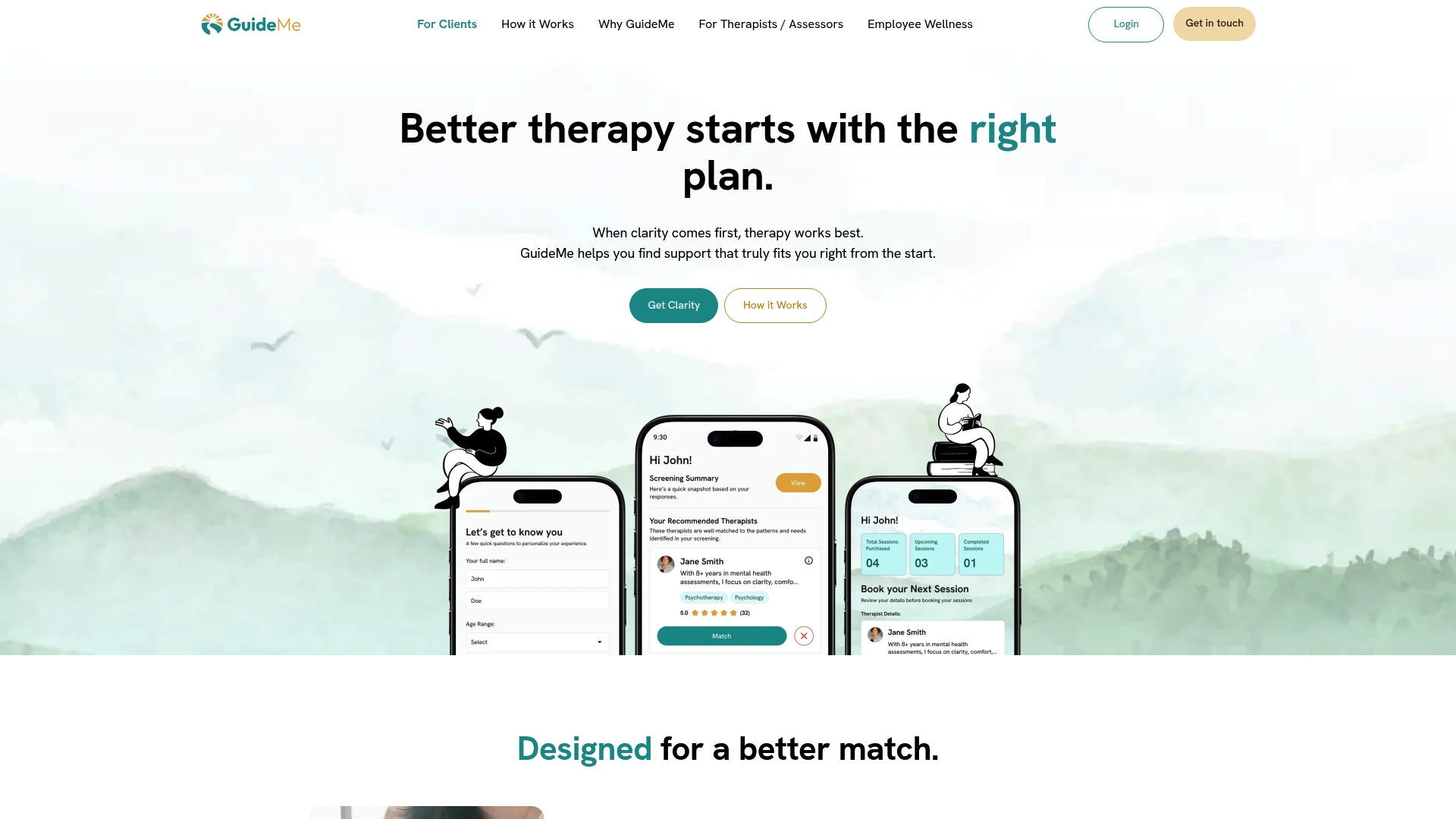
Guidemetherapy is a therapy navigation platform that combines in-depth mental-health screening with human-led, AI-assisted therapist matching. Rather than searching through directories and hoping for the best, you receive a personalised therapy plan and get matched with a therapist whose approach fits your specific needs, including those related to emotional eating, body image, and food-related anxiety. Ongoing support between sessions means you are not left without guidance while you wait for your next appointment.
Guidemetherapy is not a substitute for clinical nutrition care. For medical nutrition therapy, always seek an HCPC-registered dietitian. But for the mental-health dimension of your relationship with food, start your therapy matching with Guidemetherapy and get the right support in place alongside your nutrition care.
Sources
The sources below are the primary references used in this guide. Use them to verify practitioner credentials, check NHS pathways, and read deeper on specific topics.
- NCI Dictionary — nutritional counseling
- Precision nutrition • The Nutrition Source (Harvard T.H. Chan School of Public Health)
- NCBI PMC article (PMC9277128)