

Addiction counselling is a structured, evidence-based form of psychosocial treatment that helps people address the psychological, social, and emotional drivers behind substance use disorders and behavioural addictions. It is not a single technique but a professional relationship built around your specific situation, goals, and recovery needs. At its core, addiction counselling aims to:
- Reduce harm and support safer choices around substance use or addictive behaviour
- Build practical coping skills to manage triggers, cravings, and difficult emotions
- Create a personalised recovery plan with short- and long-term goals
- Connect you with wider support, including medical, social, and community services
Table of Contents
- What does an addiction counsellor actually do?
- Where can you get addiction counselling in the UK?
- What therapy approaches are used in addiction counselling?
- What happens in addiction counselling, step by step?
- What can counselling realistically achieve, and what are its limits?
- How effective is addiction counselling?
- How do you choose an addiction counsellor in the UK?
- Common misconceptions about addiction counselling
- When is addiction counselling the right choice, and when is something else needed?
- Key takeaways
- Why the right match matters more than most people think
- Guidemetherapy helps you find the right counsellor from the start
- Useful sources and further reading
What does an addiction counsellor actually do?
An addiction counsellor's role covers far more than talking through problems. According to the Cleveland Clinic, their duties include assessment, treatment planning, crisis intervention, psychoeducation, and active coordination with medical and social services. In practice, that means your counsellor will carry out a thorough assessment at the start, screen for co-occurring mental health conditions (sometimes called dual diagnosis), and use that information to build a treatment plan tailored to you.
Session formats vary. Some people work one-to-one with their counsellor; others join group sessions or include family members in the process. Counsellors also deliver psychoeducation, helping you understand how addiction affects the brain and behaviour, and they work with you on relapse-prevention planning from early on.
What counsellors do not do is equally worth knowing. Addiction counselling is a psychosocial intervention. Medical detox, prescribing of medications such as methadone or buprenorphine, and medication-assisted treatment (MAT) are clinical services delivered by doctors and prescribing nurses. A counsellor will refer you to those services when needed, but they do not prescribe or manage physical withdrawal themselves.
Therapeutic alliance, the trust and working relationship between you and your counsellor, is one of the strongest predictors of engagement and positive outcomes in addiction treatment. Choosing someone you feel genuinely comfortable with matters as much as their qualifications.
Pro Tip: If you have a co-occurring mental health condition such as depression or anxiety alongside addiction, ask specifically whether the counsellor has experience with dual diagnosis. Not all services are equally equipped for this.
Where can you get addiction counselling in the UK?
Access routes in the UK are broader than many people realise, and cost is not always a barrier.
- NHS local drug and alcohol services: Your GP is usually the first point of contact. They can refer you directly into NHS-commissioned community drug and alcohol teams, which offer free assessment and treatment. The NHS guidance on getting help for drug addiction also lists routes to self-refer in many areas, without needing a GP appointment first.
- Specialist charities: Organisations such as We Are With You, Turning Point, and Change Grow Live operate across England, Scotland, and Wales, offering free counselling, group work, and harm-reduction support. Waiting times vary by area.
- Mutual-help groups: Alcoholics Anonymous, Narcotics Anonymous, and SMART Recovery offer peer-led support that complements formal counselling. They are free, widely available, and can be accessed alongside other treatment.
- Private counsellors: A private addiction counsellor typically charges between £50 and £100 per session, though fees vary considerably by location and experience. Private therapy usually means shorter waiting times and more flexibility over session frequency.
- Online therapy platforms: Digital counselling has expanded significantly and can be a practical option if you have limited local provision, work irregular hours, or prefer the privacy of home. For practical ways to support yourself between sessions, online resources can also fill gaps.
- Residential and inpatient services: When someone needs medically supervised detox or intensive support, residential rehab is the appropriate route. Your GP, NHS drug and alcohol team, or a private provider can advise on suitability and funding options.
What therapy approaches are used in addiction counselling?
Several evidence-based methods are used in addiction counselling, often in combination. Understanding what each approach targets helps you know what to expect and what questions to ask.

| Therapy | What it targets | Typical use case |
|---|---|---|
| Cognitive Behavioural Therapy (CBT) | Unhelpful thought patterns and behaviours | Identifying triggers, building coping skills, preventing relapse |
| Motivational Interviewing (MI) | Ambivalence and readiness to change | Early stages of treatment or when motivation is low |
| Dialectical Behaviour Therapy (DBT) | Emotional dysregulation and distress tolerance | Co-occurring mental health conditions, self-harm, complex trauma |
| Contingency Management | Reinforcing abstinence with positive incentives | Stimulant use disorders, where other therapies have limited effect |
| Family Therapy | Relationship dynamics and family systems | When family relationships are a significant factor in use or recovery |
| Peer Support | Peer accountability and spiritual framework | Alcohol and drug dependence, long-term community support |
| Harm Reduction Approaches | Reducing risk without requiring abstinence | People not yet ready or able to stop completely |
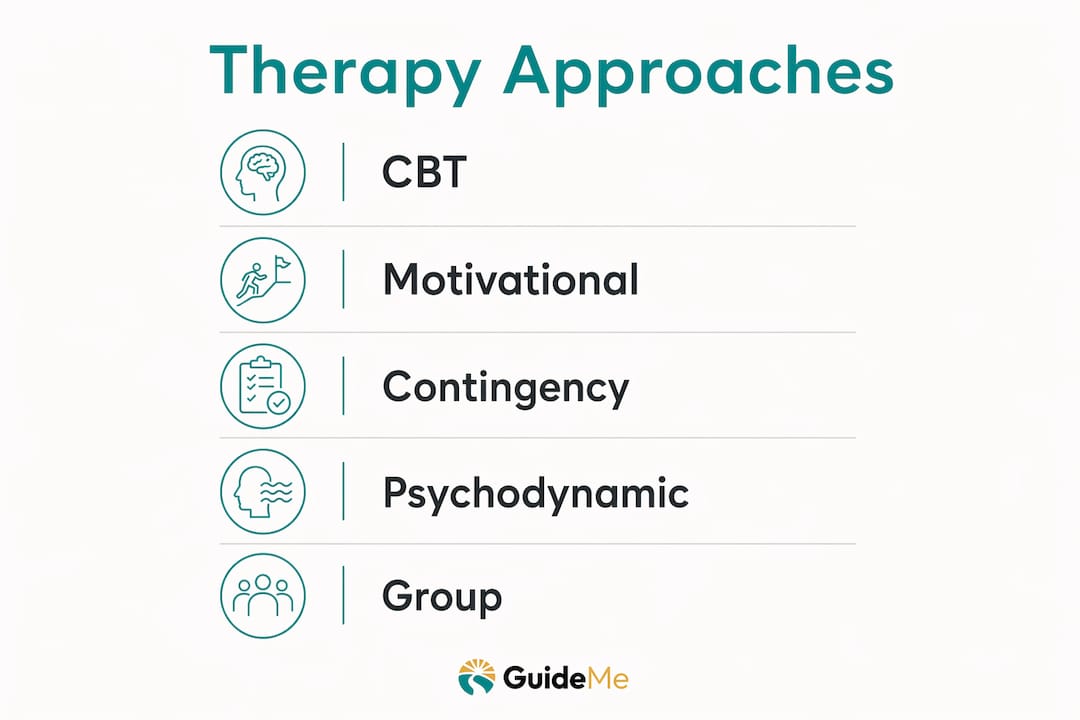
Most people receive a combination of these approaches rather than a single method. Behavioural therapies such as CBT and MI have the strongest evidence base across addiction types, but the right mix depends on your specific substance use, mental health, and personal goals.
What happens in addiction counselling, step by step?
- Initial comprehensive assessment. Your counsellor gathers a detailed picture of your substance use history, physical and mental health, living situation, relationships, and what you want from treatment. This personalised assessment forms the foundation of everything that follows.
- Agreeing a personalised treatment plan. Together, you and your counsellor set short- and long-term goals. A good therapy plan is specific to you, not a template. It outlines which therapies you will use, how often you will meet, and what other supports will be involved.
- Regular sessions. Most people start with weekly or fortnightly one-to-one sessions. Group sessions, family sessions, or telephone and digital check-ins may be added depending on your needs and the service you are using.
- Ongoing monitoring and plan adjustment. Your counsellor reviews progress regularly and updates the plan as your situation changes. Treatment for addiction is rarely linear.
- Relapse-prevention planning. From early in treatment, sessions focus on identifying high-risk situations, building coping responses, and preparing a clear plan for what to do if you experience a recurrence. Recurrence is common in addiction and is treated as a signal to adjust the plan, not as failure. Recovery-oriented counselling uses proactive check-ins and updated support plans rather than withdrawing care.
What can counselling realistically achieve, and what are its limits?
Addiction counselling produces real, measurable benefits for many people. Reduced substance use, improved mental health, stronger relationships, and better day-to-day functioning are all well-documented outcomes. Over the longer term, counselling helps people build the recovery capital, housing stability, employment, social connection, and sense of purpose, that sustains recovery beyond the treatment period itself.
The limits are equally worth understanding. Counselling alone is often insufficient for severe physical dependence, where medically supervised detox is the necessary first step. For opioid use disorder, medication-assisted treatment with methadone or buprenorphine is the clinical standard, and counselling works best as a complement to it rather than a replacement. Psychosocial therapies are most effective when combined with appropriate pharmacological management where that is clinically indicated.
Pro Tip: Do not wait until you have stopped using before seeking counselling. Many services work with people who are still using, focusing on harm reduction and building motivation first.
How effective is addiction counselling?
The evidence for addiction counselling is strong, particularly for CBT and motivational interviewing, which have consistent support across multiple substance types and settings. Contingency management has shown robust results for stimulant use disorders. No single therapy works for everyone, which is why personalised, combined approaches consistently outperform single-modality treatment.
The factor that research returns to most consistently is therapeutic alliance. When you trust your counsellor and feel genuinely heard, you are more likely to stay in treatment, engage with the process, and achieve better outcomes. A strengths-based, person-centred approach that builds on your existing resources, rather than focusing only on problems, also improves treatment completion and long-term results.
Evidence note: SAMHSA's evidence reviews consistently recommend combined pathways of care, counselling alongside peer support and medication where appropriate, over single-modality approaches for most substance use disorders.
Combined care matters in practice. People who receive counselling alongside peer support and, where indicated, medication have better long-term outcomes than those receiving any one element alone.
Pro Tip: Ask your counsellor how they measure progress. Services that use structured outcome monitoring, such as regular brief questionnaires, tend to adjust treatment more responsively than those relying on informal review alone.

How do you choose an addiction counsellor in the UK?
Choosing well makes a genuine difference to how treatment goes. Here is what to look for and what to ask.
Credentials to check:
- Registration with the British Association for Counselling and Psychotherapy (BACP) or the UK Council for Psychotherapy (UKCP) confirms the counsellor meets professional training and ethical standards.
- NHS-affiliated services are regulated and quality-assured; private practitioners should still hold professional registration.
- Specific experience with addiction and, if relevant, dual diagnosis is worth confirming directly.
Questions worth asking in a first call:
- How long have you been working with addiction specifically?
- What approaches do you use, and how will you tailor them to my situation?
- How do you handle a crisis between sessions?
- What is your approach if I have a recurrence?
- What are your fees, and do you offer a sliding scale?
Red flags:
- Guarantees of a cure or a fixed timeline for recovery
- Pressure to commit to a long, expensive package before any assessment
- Vague or evasive answers about confidentiality and safeguarding procedures
For practical guidance on finding a therapist in the UK, including what to look for in a first session, there are clear steps you can follow before committing to any service.
Cost shapes access. NHS and charity services are free but may involve waiting times. Private counsellors offer faster access at a cost. Online platforms often sit between the two on both price and speed.
Common misconceptions about addiction counselling
Several beliefs put people off seeking help, and most of them are not accurate.
"Counselling is only for people who have hit rock bottom." Addiction counselling is appropriate at any stage of problematic use. Early intervention often produces better outcomes than waiting for a crisis.
"You have to want to stop completely before counselling can help." Motivational interviewing was specifically developed for people who are ambivalent about change. You do not need to arrive with a firm commitment to abstinence.
"Counselling is just talking and does not really do anything." Evidence-based therapies such as CBT and contingency management produce measurable changes in behaviour, thinking patterns, and brain function over time.
"Addiction is a moral failing, so counselling is pointless." Addiction is a chronic, treatable condition with neurological underpinnings. Counselling addresses it as a health issue, not a character flaw.
"One type of therapy works for everyone." There is no universal approach. Effective treatment is personalised, and a good counsellor will adapt their methods to your specific needs, history, and goals.
When is addiction counselling the right choice, and when is something else needed?
Addiction counselling is appropriate when someone wants to understand and change their relationship with a substance or behaviour, build coping skills, address underlying emotional or psychological factors, and work towards recovery goals, whether abstinence or harm reduction.
Other treatments take priority in specific situations. Medical detox is necessary when physical dependence is severe enough to make withdrawal dangerous, particularly with alcohol, benzodiazepines, or opioids. Medication-assisted treatment is the clinical standard for opioid use disorder and should not be substituted with counselling alone. Residential rehabilitation is appropriate when someone's home environment is a significant barrier to recovery, or when intensive, structured support is needed that outpatient counselling cannot provide.
In most cases, the answer is not counselling or another treatment but counselling alongside other elements of a wider care plan. A good counsellor will tell you honestly when a referral is needed and help you access it.
Key takeaways
Addiction counselling works best as part of a wider recovery plan that combines personalised therapy, peer support, and medical care where indicated.
| Point | Details |
|---|---|
| Clear definition | Addiction counselling is evidence-based psychosocial treatment addressing psychological, social, and emotional drivers of addiction. |
| Evidence base | CBT, motivational interviewing, and contingency management have the strongest research support across addiction types. |
| Combined care | Counselling alongside peer support and medication (where appropriate) consistently outperforms single-modality treatment. |
| Recurrence is normal | A recurrence is a signal to adjust the plan, not a failure; recovery-oriented counselling responds with updated support, not withdrawal of care. |
| Guidemetherapy | Guidemetherapy matches you to a registered counsellor through in-depth screening and a personalised therapy plan, saving time and improving fit. |
Why the right match matters more than most people think
The research on what makes addiction counselling work keeps returning to the same finding: the relationship between you and your counsellor predicts outcomes more reliably than any single technique. That is not a soft observation. It is one of the most replicated findings in the psychotherapy literature.
What that means practically is that the first counsellor you see is not necessarily the right one. Many people settle because they do not know what a good fit feels like, or because they feel grateful just to have found someone. But a counsellor who listens carefully, builds on your strengths rather than cataloguing your problems, and adjusts their approach as your situation changes is doing something qualitatively different from one who follows a script.
Recovery capital, the practical resources that support a stable life, housing, relationships, employment, community, matters as much as what happens in the session room. The best counsellors work across both: they help you build skills inside sessions and connect you to the wider supports that make those skills usable in real life. Seeking help is not the hard part for most people. Finding the right help, at the right time, with someone you can actually work with, is where the process tends to break down. That is the gap worth closing.
Guidemetherapy helps you find the right counsellor from the start
Knowing what addiction counselling is and actually finding the right counsellor are two very different things. Guidemetherapy closes that gap with in-depth therapy screening, a personalised therapy plan, and human-led, AI-assisted matching that connects you to a registered counsellor suited to your specific needs, rather than whoever happens to be available.
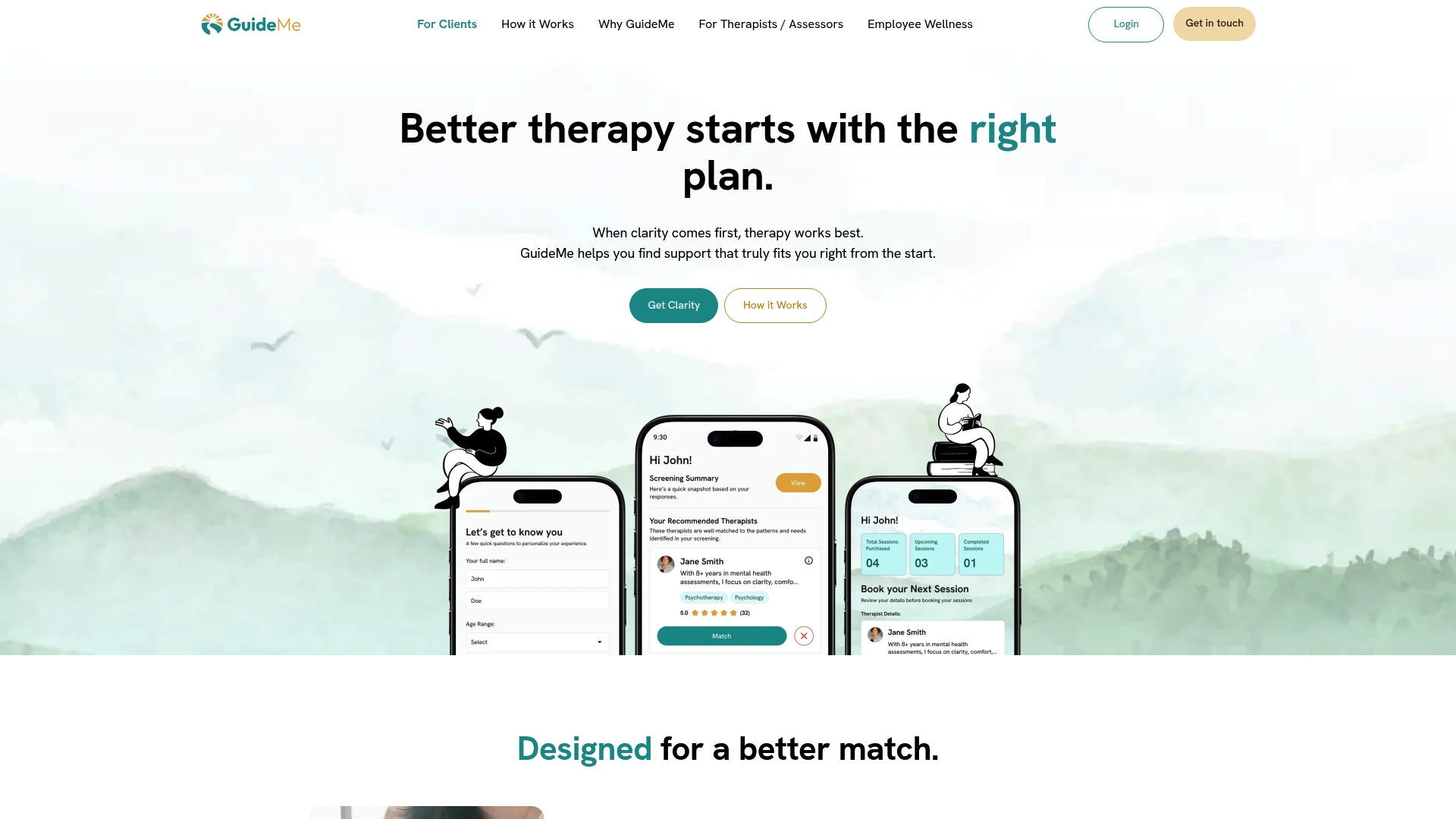
For people dealing with addiction, that fit matters enormously. Guidemetherapy's matching process considers your substance use history, any co-occurring mental health concerns, your preferences around approach and format, and your practical circumstances, so you spend less time searching and more time in treatment that actually works for you.
Guidemetherapy is not a replacement for emergency or medical care. If you are in crisis or need medically supervised detox, please contact your GP or call NHS 111 first. For everyone else ready to take a considered next step, start your therapy plan with Guidemetherapy today.
Useful sources and further reading
The following sources are reliable starting points for anyone wanting to read further or verify the evidence behind addiction counselling.
| Source | What it covers |
|---|---|
| NHS: Drug addiction — getting help | UK referral routes, self-referral options, and immediate support contacts |
| NIDA: Principles of Drug Addiction Treatment | Research-based guide to assessment, treatment planning, and combined care |
| NCBI / StatPearls: Addiction Psychotherapeutic Care | Clinical overview of evidence-based psychosocial therapies for addiction |
| SAMHSA TIP: Counselling approaches to promote recovery | Recovery-oriented counselling, combined care pathways, and recovery capital |
| NCBI: Framework for supporting recovery with counselling | Therapeutic alliance, recurrence management, and person-centred competencies |
| NIDA: Treatment research topics | Overview of behavioural therapies, medications, and treatment effectiveness |
For personalised advice on which services are right for your situation, speak to your GP or contact your local NHS drug and alcohol team directly.