
TL;DR:
- Anxiety therapy aims to reduce symptoms by changing unhelpful thoughts and behaviors through structured treatments like CBT. Most individuals experience meaningful improvement within 12 to 16 sessions, especially when therapy is personalized and includes homework. Long-term benefits include reduced physical symptoms, stronger coping skills, and improved relationships.
Anxiety therapy is a structured psychological treatment designed to reduce anxiety symptoms by changing unhelpful thought patterns and behaviours. The most widely used form is cognitive behavioural therapy (CBT), which corrects negative thought and behaviour patterns through targeted cognitive and behavioural techniques. Standard treatment also draws on exposure therapy, insight-oriented psychotherapy, medication, and complementary approaches. CBT for anxiety typically runs for 12–16 sessions, with most people noticing meaningful improvements within that timeframe. Knowing what anxiety therapy involves, and what to expect from it, makes starting the process far less daunting.
What is anxiety therapy and what are its main types?
Anxiety therapy is the clinical term for a range of evidence-based treatments that target the thoughts, feelings, and behaviours driving anxiety disorders. The three main pillars of treatment are psychotherapy, medication, and complementary therapies, with research consistently showing that combining psychotherapy and medication produces the strongest results. Psychotherapy is the foundation. Medication can create mental space for therapy to take root, but it does not replace the cognitive and behavioural work that produces lasting change.
Cognitive behavioural therapy (CBT)
CBT is the most extensively researched anxiety therapy technique available. It works by identifying distorted thinking patterns, challenging them directly, and replacing them with more accurate responses. A person with social anxiety, for example, might learn to recognise catastrophic predictions ("everyone will judge me") and test them against real evidence. CBT is structured, goal-focused, and produces measurable results within a defined number of sessions.

Exposure therapy
Exposure therapy is a specific CBT technique that gradually confronts feared situations or objects in a controlled, safe setting. Repeated exposure reduces the fear response over time because the brain learns that the feared outcome does not occur. It is particularly effective for phobias, panic disorder, and post-traumatic stress. The approach requires courage from the person in therapy, but the results are among the most durable of any anxiety treatment.
Insight-oriented psychotherapy
Insight-oriented approaches, including psychodynamic therapy, focus on understanding the root causes of anxiety rather than managing symptoms alone. This style suits people whose anxiety is tied to unresolved past experiences or relationship patterns. It tends to run longer than CBT but can produce deep, lasting change when the fit between therapist and person is strong.
| Therapy type | Primary goal | Typical structure |
|---|---|---|
| Cognitive behavioural therapy | Change thought and behaviour patterns | 12–16 structured sessions |
| Exposure therapy | Reduce fear through gradual confrontation | Integrated within CBT or standalone |
| Psychodynamic therapy | Understand root causes of anxiety | Open-ended, longer term |
| Medication | Reduce acute symptoms | Prescribed alongside therapy |
| Complementary therapies | Support overall wellbeing | Varies by approach |
Pro Tip: Ask any prospective therapist which modality they use and why it suits your specific anxiety symptoms. A clear answer signals clinical confidence and helps you make a more informed choice.
Therapy is not one-size-fits-all. Personalised plans integrating multiple approaches consistently improve outcomes compared to a single-method approach. You can read more about the range of counselling approaches for mental health to get a broader sense of what might suit you.
What benefits can you expect from anxiety therapy?
The benefits of anxiety therapy are well documented and extend well beyond symptom relief. For generalised anxiety disorder, 60–80% of people show significant improvement following exposure therapy, with those benefits lasting 2–8 years. That is not a short-term fix. It reflects genuine, durable change in how the brain processes threat.
Beyond statistics, the practical gains from therapy include:
- Reduced physical symptoms. Tension, sleep disruption, and racing thoughts decrease as anxiety becomes more manageable.
- Stronger coping skills. You build a personal toolkit of techniques to use when anxiety rises, rather than being caught off guard.
- Greater psychological flexibility. Therapy teaches you to respond to difficult thoughts rather than react to them automatically.
- Improved relationships. Reduced anxiety often leads to clearer communication and less avoidance in personal and professional life.
- Long-term resilience. Skills learned in therapy remain available for years, reducing the risk of relapse.
The therapeutic alliance, meaning the trust and connection between you and your therapist, is one of the strongest predictors of positive outcomes. This matters more than most people realise when choosing a therapist. A good match does not just make sessions more comfortable. It directly improves how much you gain from the process.
Therapy success also depends on personalisation. A personalised therapy plan that accounts for your specific anxiety triggers, history, and goals will outperform a generic programme every time.
How does anxiety therapy work in practice?
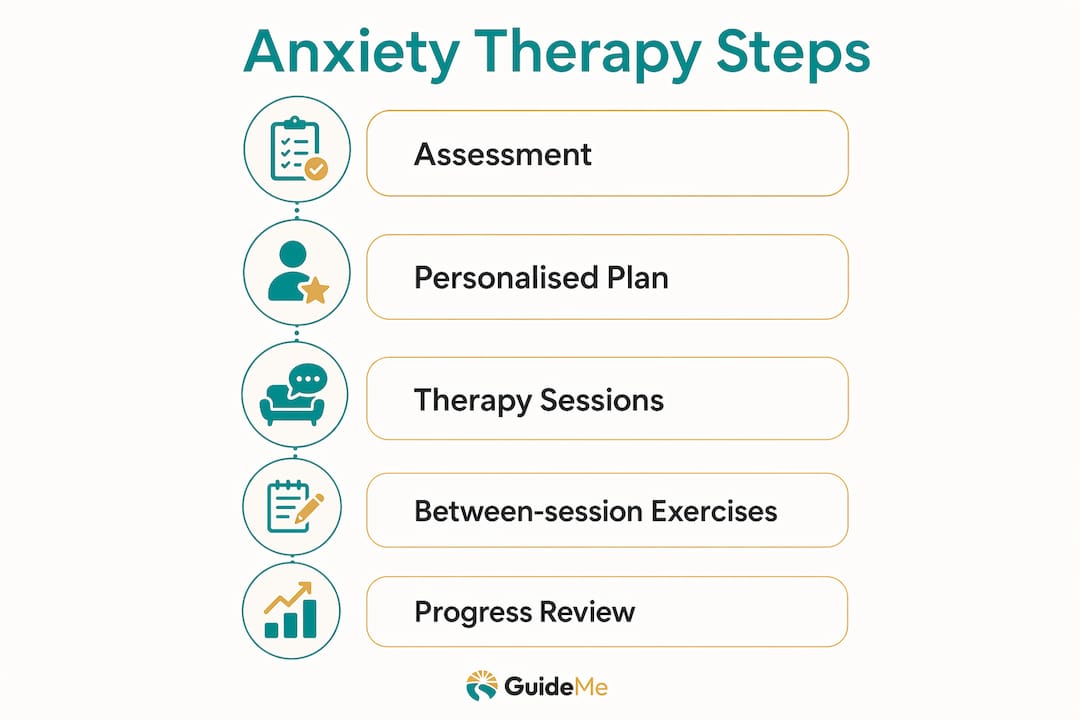
Understanding the structure of therapy sessions removes a great deal of uncertainty before you begin. Most sessions last 50–60 minutes and follow a consistent pattern: reviewing progress since the last session, working through a specific skill or topic, and agreeing on tasks to practise before the next appointment.
The process typically unfolds in four stages:
- Assessment. Your therapist gathers a full picture of your symptoms, history, and goals. This shapes the entire treatment plan.
- Psychoeducation. You learn how anxiety works in the body and mind. Understanding the mechanics of your own anxiety reduces its power considerably.
- Skill building. You practise techniques such as cognitive restructuring, breathing regulation, or graded exposure, both in sessions and between them.
- Consolidation. As therapy progresses, you apply skills independently and prepare for life after the formal treatment period ends.
Between sessions, therapists assign exercises to reinforce what you have learned. Homework such as mood journals or exposure tasks is not optional. It is where the real skill-building happens. People who complete between-session tasks consistently make faster progress than those who treat therapy as a weekly conversation alone.
Pro Tip: Keep a brief daily note of anxiety triggers and your responses between sessions. Even three sentences a day gives your therapist concrete material to work with and accelerates your progress significantly.
Therapy can feel emotionally demanding at times. Confronting avoided thoughts or situations stirs up discomfort. That discomfort is part of the process, not a sign that something is wrong. You can read more about essential therapy techniques to understand what specific methods your therapist may use.
What are common challenges in anxiety therapy and how can you overcome them?
Most people face at least one significant obstacle during therapy. Recognising these challenges in advance makes them easier to manage when they arise.
- Temporary anxiety increases. Starting exposure therapy or confronting avoided thoughts often raises anxiety before it falls. This is expected and signals that therapy is working, not that it is failing.
- Impatience with progress. Anxiety therapy produces gradual change. Expecting dramatic results after two or three sessions leads to discouragement. Most people notice meaningful shifts after 6–8 sessions.
- Avoidance of homework. Skipping between-session exercises slows progress significantly. Treat assigned tasks with the same commitment as the sessions themselves.
- Poor therapist fit. If you feel consistently misunderstood or the approach does not suit your needs, raise it directly with your therapist. Changing therapist is not failure. It is good clinical judgement.
- Neglecting self-care. Sleep, physical activity, and social connection all affect how well therapy takes hold. Self-care practices support therapy outcomes and are worth treating as part of your treatment plan, not as extras.
Open communication with your therapist is the single most effective way to overcome these obstacles. Therapists expect questions, setbacks, and honest feedback. Sharing concerns directly leads to adjustments that keep the process moving forward.
Key takeaways
Anxiety therapy is a structured, evidence-based process that builds lasting coping skills, with CBT and exposure therapy delivering the strongest and most durable outcomes for most people.
| Point | Details |
|---|---|
| Core definition | Anxiety therapy targets symptoms by changing thought patterns and behaviours through structured interventions. |
| Most effective types | CBT and exposure therapy produce the strongest results, often within 12–16 sessions. |
| Long-term outcomes | 60–80% of people with generalised anxiety disorder show significant improvement lasting 2–8 years. |
| Therapist fit matters | The therapeutic alliance is a strong predictor of success; finding the right match improves outcomes directly. |
| Active participation | Between-session homework is not optional. It is where skill-building and lasting change take root. |
My honest view on what anxiety therapy actually requires
People often come to therapy expecting to be fixed. That expectation sets them up for frustration. What therapy actually does is teach you to manage anxiety differently. The condition does not disappear. Your relationship with it changes.
I have seen this pattern repeatedly. The people who get the most from therapy are not the ones with the mildest symptoms. They are the ones who show up consistently, do the homework, and tell their therapist when something is not working. Therapy is a collaborative process, not a passive one.
The personalisation piece is also underestimated. A plan built around your specific triggers, history, and goals will always outperform a generic approach. If your current therapy feels like it could apply to anyone, that is worth raising. Good therapists adapt. They do not deliver the same programme to every person they see.
Patience is not a soft skill in this context. It is a clinical requirement. Progress in anxiety therapy is rarely linear. There will be weeks that feel like regression. Those weeks are often when the most important work is happening beneath the surface. Stay with the process.
— Yetty
Finding the right support with Guidemetherapy
Starting therapy is a significant step, and finding the right therapist makes all the difference to how that experience unfolds. Guidemetherapy is a therapy navigation platform that combines human expertise with AI-powered matching to help you find a therapist suited to your specific needs from the very beginning.
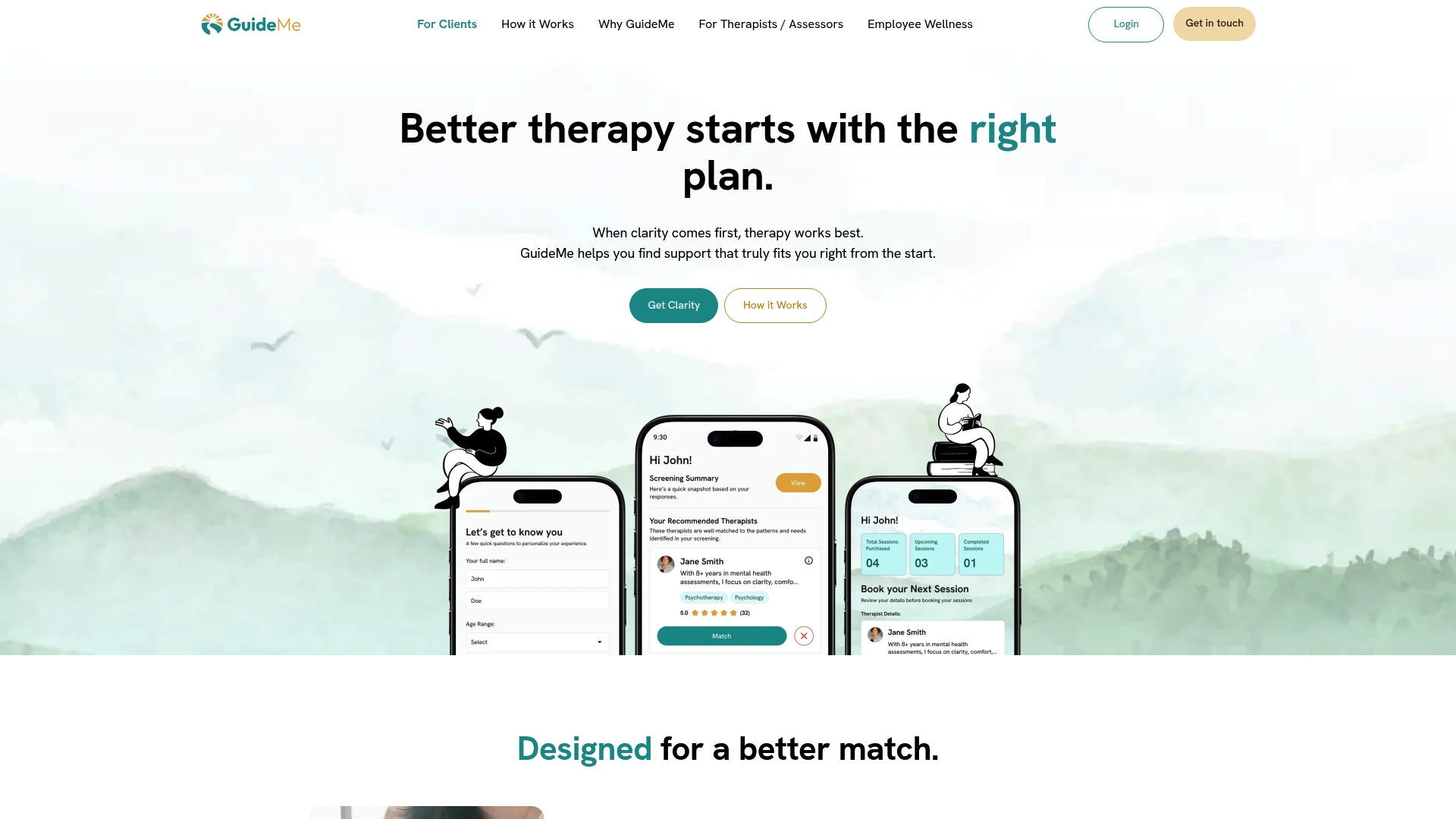
Guidemetherapy creates an in-depth therapy plan based on your individual situation, so you arrive at your first session with clarity rather than confusion. The platform handles the matching, scheduling, and navigation, leaving you free to focus on the work itself. If you are ready to take the first step, find your therapist through Guidemetherapy and start with a plan built around you.
FAQ
What is anxiety therapy in simple terms?
Anxiety therapy is a structured psychological treatment that helps people manage and reduce anxiety symptoms by changing unhelpful thoughts and behaviours. CBT is the most widely used form.
How many sessions does anxiety therapy take?
CBT for anxiety typically involves 12–16 sessions, with most people noticing meaningful improvements within that timeframe.
Does anxiety therapy actually work?
Yes. For generalised anxiety disorder, 60–80% of people show significant improvement following exposure therapy, with benefits lasting 2–8 years.
What should I expect in my first therapy session?
Your first session focuses on assessment. Your therapist will ask about your symptoms, history, and goals to build a clear picture before any treatment begins.
Can anxiety therapy work without medication?
Psychotherapy alone produces strong results for many people. Combining psychotherapy and medication yields the best outcomes overall, but medication is not a requirement for therapy to be effective.