
TL;DR:
- Art therapy is a regulated psychotherapy that uses structured art-making to promote healing and emotional regulation. It activates brain networks to access trauma beyond words, supported by evidence showing reductions in depression and anxiety. Only licensed art therapists can provide safe, clinical support through this method.
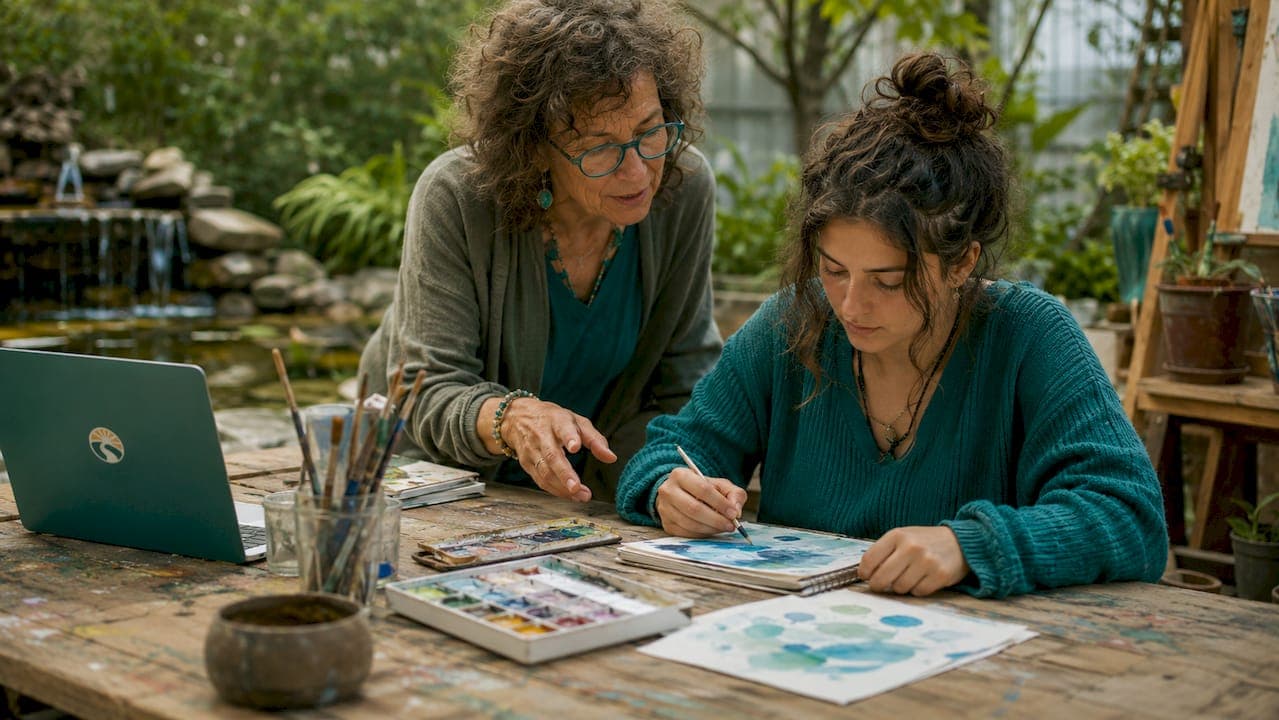
Art therapy is defined as a form of psychotherapy that uses art-making as the primary medium for psychological healing and emotional expression. Practised by trained professionals registered with bodies such as the British Association of Art Therapists (BAAT), it is a clinical discipline, not a hobby class. The process reduces distress, improves emotional regulation, and supports mental health across a wide range of conditions. Understanding what art therapy is, and how it differs from picking up a paintbrush for pleasure, is the first step towards knowing whether it could help you.
What is art therapy and how is it defined clinically?
Art therapy is a professional psychotherapy discipline that requires master's level training, clinical licensure, and adherence to professional ethics. Training covers neuroscience, developmental psychology, and psychoanalytic theory. This is not a creative enrichment course. It is a regulated mental health profession with the same clinical standing as other forms of psychotherapy.
The British Association of Art Therapists defines art therapy as using art media as the primary means of communication within a therapeutic relationship. The therapist does not teach art techniques or critique the work produced. Instead, the art becomes a vehicle for exploring feelings, thoughts, and experiences that are difficult to put into words.
Art therapy is distinct from expressive arts therapy, music therapy, and dance movement therapy. Each of those disciplines has its own training standards, methods, and clinical scope. Art therapy specifically centres on visual art media, including drawing, painting, collage, and sculpture, within a structured clinical framework.
How does art therapy work? The clinical process explained
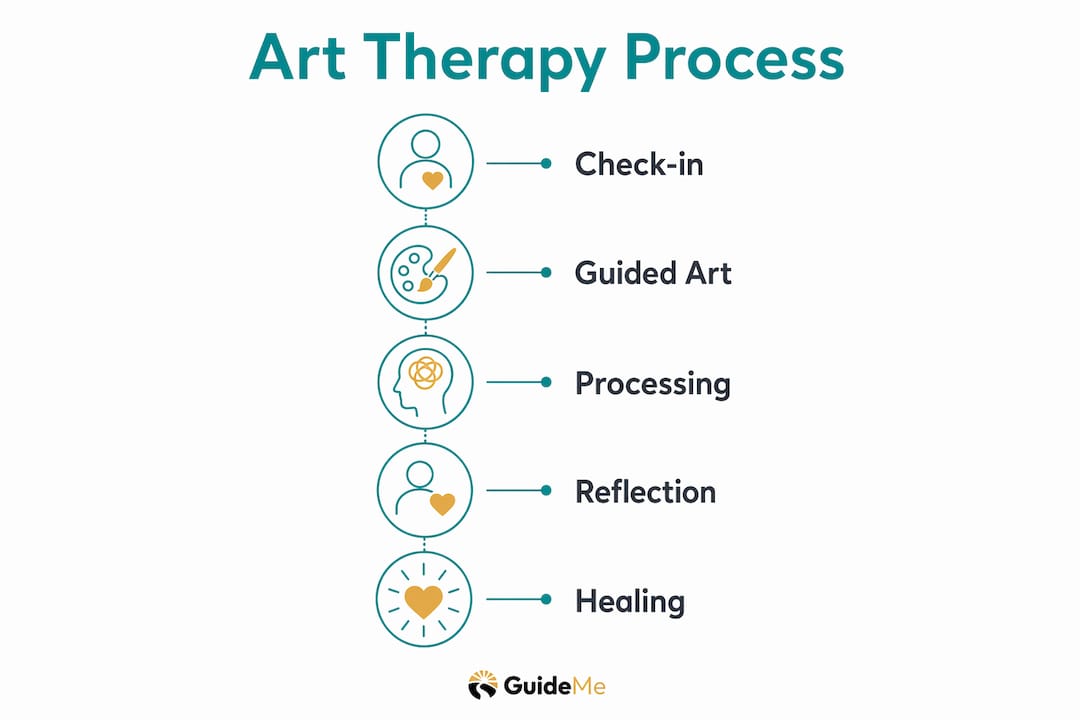
A standard art therapy session follows a predictable three-phase structure: a verbal check-in, guided art-making using specific materials, and a reflection phase that links the artwork to the client's mental health goals. Sessions typically last 45–60 minutes. This structure is used across settings including hospitals, private practice, and schools.
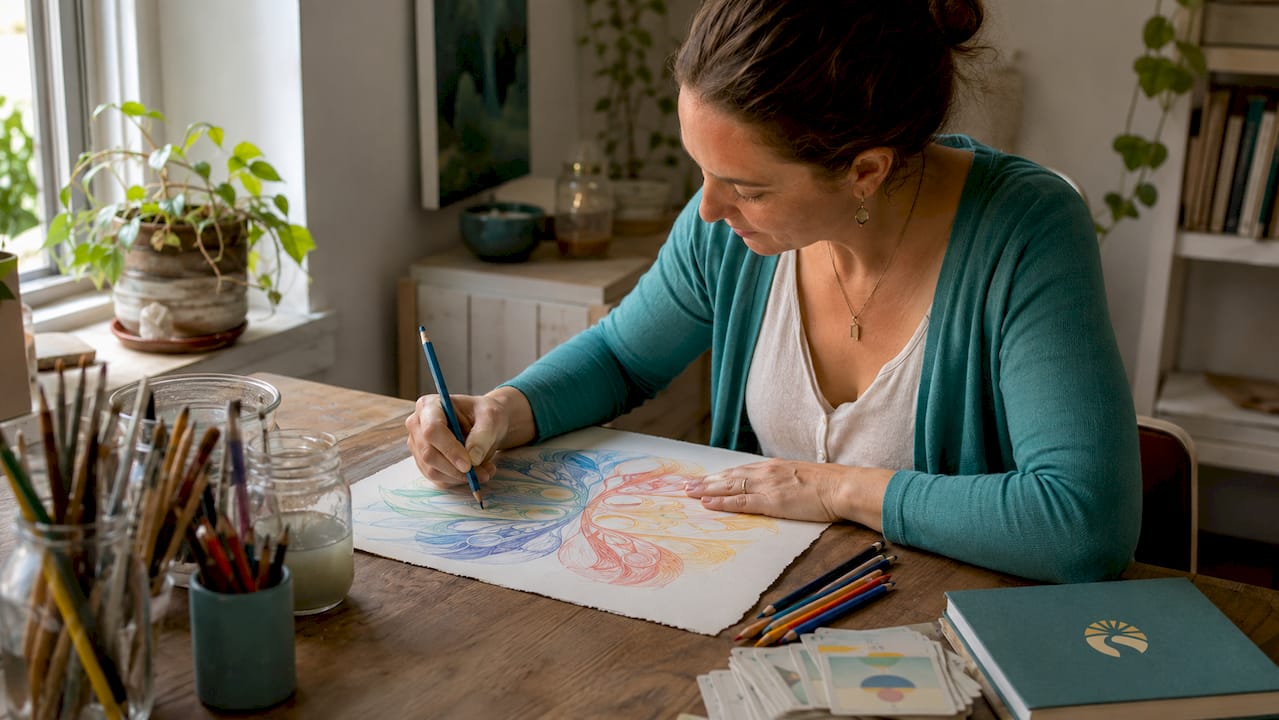
The therapeutic mechanism goes deeper than creative expression. Art therapy activates the Salience Network in the brain, which bridges the gap between the rumination network and the focused attention network. This allows the brain to access trauma stored in non-verbal regions that conventional talk therapy cannot easily reach. That is why clients sometimes find art therapy unlocks feelings they could not articulate in a standard counselling session.
Art therapists also use specific clinical tools called directives. One well-known example is bilateral drawing, where the client draws simultaneously with both hands. This technique facilitates inter-hemispheric brain communication, a process comparable in effect to EMDR therapy for trauma processing. These are not random creative exercises. They are neurologically informed interventions designed to target specific psychological processes.
The role of the therapist is central to how the process works. Art therapists are trained to monitor for emotional dysregulation during sessions and to guide clients through difficult material safely. They hold a master's level accreditation and operate within a clinical ethics framework.
Pro Tip: You do not need any artistic ability to benefit from art therapy. The therapist is not assessing the quality of your work. The process of making the art is where the therapeutic value lies, not the finished piece.
- Verbal check-in. The session opens with a brief conversation about how the client is feeling and what they want to focus on.
- Guided art-making. The therapist introduces a directive, such as a drawing prompt or a specific material, chosen to support the session's therapeutic goals.
- Reflection and integration. Client and therapist discuss what emerged during the art-making, connecting it to the client's experiences and treatment plan.
What are the benefits of art therapy for mental health?
The benefits of art therapy are supported by clinical research, including randomised controlled trials. Studies show that art therapy reduces depression in post-stroke patients and reduces anxiety in cancer survivors, with measurable changes in stress biomarkers such as salivary cortisol and heart rate variability (HRV). These are objective physiological markers, not just self-reported feelings. That evidence places art therapy firmly in the category of clinically validated treatment.
Art therapy also improves emotional regulation, self-esteem, cognitive function, and social skills. These outcomes make it particularly effective for neurodivergent individuals, trauma survivors, and people living with chronic illness. It works well as an adjunct to cognitive behavioural therapy (CBT) or standard psychotherapy, adding a non-verbal dimension that verbal therapies alone cannot provide.
The benefits of art therapy extend across a broad range of people:
- Trauma survivors. Art therapy accesses somatic and non-verbal trauma memories that talk therapy may not reach, making it a valuable part of trauma treatment.
- Cancer patients. Research shows measurable reductions in anxiety and improvements in quality of life for people undergoing cancer treatment.
- Neurodivergent individuals. The non-verbal, process-led format suits people who find traditional talking therapies difficult to engage with.
- People with depression or anxiety. Clinical trials show reductions in symptom severity alongside improvements in stress biomarkers.
- Children and young people. Art therapy provides a developmentally appropriate way to process difficult emotions without requiring verbal fluency.
One of the less obvious benefits is what happens when a client struggles with the art itself. Fears of artistic inadequacy are therapeutic entry points. A therapist uses a client's anxiety about "not being good enough" to explore perfectionism, self-criticism, and trauma avoidance. The discomfort is not a barrier to therapy. It is part of the therapy.
How is art therapy different from recreational art activities?
Art therapy is not an art class, a craft group, or a wellness workshop. The distinction matters clinically. Clinical art therapy requires licensed therapists trained to monitor for emotional dysregulation and provide targeted mental health interventions. A recreational art group does not carry that clinical responsibility or capability.
The table below outlines the core differences:
| Feature | Clinical art therapy | Recreational art activity |
|---|---|---|
| Practitioner | Licensed art therapist with master's training | Art teacher, facilitator, or no professional |
| Purpose | Mental health treatment with clinical goals | Creative enjoyment or skill development |
| Session structure | Three-phase clinical format with treatment plan | Open or skills-based format |
| Emotional safety | Therapist monitors and manages dysregulation | No clinical oversight |
| Outcome focus | Symptom reduction, emotional regulation | Artistic output or social engagement |
Confusing the two carries real risk. A person processing trauma in an unmonitored art group may encounter intense emotional material without the clinical support needed to manage it safely. Only a registered art therapist can provide that containment.
Art therapy is also distinct from other creative therapies such as music therapy or dance movement therapy. Each has its own professional body, training pathway, and clinical method. Art therapy specifically uses visual art media within a structured psychotherapeutic relationship. The role of the therapist in holding that relationship safely is what separates it from any other creative activity.
Pro Tip: When searching for an art therapist, check that they are registered with the British Association of Art Therapists (BAAT) or hold equivalent accreditation in your country. Registration confirms clinical training and ethical accountability.
What can you expect in a typical art therapy session?
Clients do not need to bring any materials or have any prior art experience. The therapist provides all materials and selects them deliberately based on the session's therapeutic goals. Watercolours, clay, collage materials, and charcoal each have different sensory properties that a therapist may choose for specific clinical reasons.
A first session typically focuses on establishing safety and understanding the client's goals. The therapist explains the process, answers questions, and begins building the therapeutic relationship. This mirrors the therapy intake process used across most psychotherapy modalities.
What to expect across a course of art therapy sessions:
- Sessions follow the same three-phase structure each time, which creates predictability and emotional safety.
- The repetitive session structure supports affect regulation, which is particularly important for clients with trauma histories.
- Emotional fatigue after sessions is normal. The work can be demanding, and clients should allow time to decompress afterwards.
- Progress is not always linear. Some sessions feel productive; others feel stuck. Both are part of the process.
- The therapist guides reflection, but does not interpret the artwork for the client. Meaning is co-constructed in dialogue.
Art therapy is clinical work. It is not relaxing in the way a craft afternoon might be. Clients should approach it with the same openness and commitment they would bring to any form of psychotherapy. If you are considering starting, a practical next step is to understand how to schedule therapy and what the onboarding process involves.
Key takeaways
Art therapy is a clinically validated psychotherapy that uses structured art-making to reduce distress, improve emotional regulation, and access trauma stored beyond the reach of verbal therapy.
| Point | Details |
|---|---|
| Clinical definition | Art therapy is a regulated psychotherapy, not a creative hobby, requiring master's level training. |
| Neurological mechanism | It activates the Salience Network, accessing non-verbal trauma memories that talk therapy cannot reach. |
| Evidence-based benefits | Research shows reductions in depression and anxiety, with measurable changes in cortisol and HRV. |
| No art skills needed | Artistic ability is irrelevant; the therapeutic value lies in the process, not the finished artwork. |
| Clinical oversight matters | Only licensed art therapists can safely monitor emotional dysregulation during sessions. |
Why art therapy surprised me more than any other modality
I came to art therapy sceptically. The idea that drawing a picture could address trauma felt, frankly, thin compared to the rigour of CBT or psychodynamic work. What changed my view was understanding the neuroscience. The Salience Network finding is not a soft claim. It explains why a client who has spent years in talk therapy without shifting a particular piece of trauma can, in a few art therapy sessions, access something genuinely new. Verbal therapy works through language-centred brain regions. Art therapy goes around them.
The other thing that struck me was how the therapist uses resistance. When a client says "I can't draw," that statement is not a problem to solve. It is data. A skilled art therapist hears perfectionism, fear of judgement, or avoidance, and works with it directly. That reframe alone is worth the session fee.
What I would tell anyone considering it: do not wait until you have exhausted every other option. Art therapy works well alongside verbal psychotherapy, not just as a last resort. And if you are supporting someone with trauma, the non-verbal access it provides may reach places that nothing else has.
— Yetty
Finding qualified art therapy support with Guidemetherapy
Knowing that art therapy could help is one thing. Finding the right qualified therapist is another matter entirely.
Guidemetherapy is a therapy navigation platform that matches people with the right therapist from the start, using a combination of human expertise and AI-powered matching. Rather than searching through directories alone and hoping for the best, you receive an in-depth therapy plan and a shortlist of therapists suited to your specific needs, including art therapists where appropriate. The process is designed to reduce the confusion that so often comes with finding the right support and to make your first therapy experience as comfortable as possible.
FAQ
What is art therapy used to treat?
Art therapy is used to treat depression, anxiety, trauma, PTSD, and emotional dysregulation, and is also used with cancer patients and neurodivergent individuals. Clinical research supports its effectiveness across these populations, with measurable improvements in stress biomarkers.
Do I need to be good at art to try art therapy?
No artistic ability is required. The therapeutic value lies in the process of making art, not the quality of the finished work. Therapists actively use clients' anxieties about artistic skill as part of the therapeutic process.
How is art therapy different from an art class?
Art therapy is a regulated clinical psychotherapy delivered by a licensed professional with master's level training. An art class focuses on skill development and creative output, with no clinical oversight or mental health treatment goals.
How long does art therapy take to work?
The duration varies depending on the individual and their presenting concerns. Some clients notice shifts within a few sessions; others benefit from longer-term work. Art therapy is often used alongside other psychotherapy modalities to support progress.
Is art therapy available on the NHS?
Art therapy is available through some NHS mental health services, particularly in inpatient and community mental health settings. Availability varies by region, and many people access art therapy through private practice or specialist referral.