

TL;DR:
- Professional counselling is a structured, evidence-based therapeutic relationship delivered by licensed practitioners with advanced training. It focuses on growth, adjustment, and mental wellness through tailored approaches like CBT and DBT, not just crisis support. The process involves assessment, goal setting, ongoing therapy, and regular progress reviews in a confidential environment.
Professional counselling is defined as a formal, structured therapeutic relationship that empowers individuals to accomplish mental health, wellness, and personal growth goals through evidence-based strategies. The American Counseling Association describes it as a purposeful practice built on clinical skill, ethical standards, and a genuine commitment to client wellbeing. Many people confuse counselling with simply talking through problems, but the distinction matters. Professional counselling is governed by regulatory frameworks, delivered by qualified practitioners, and grounded in psychological theory. If you are exploring your mental health options, understanding what professional counselling actually involves is the clearest first step you can take.
What is professional counselling and who delivers it?
Professional counselling is a graduate-level discipline. Counsellors hold at least a master's degree from a programme accredited by the Council for Accreditation of Counseling and Related Educational Programs (CACREP). That accreditation standard exists to protect clients by confirming that a counsellor's training meets a consistent, rigorous benchmark.

Qualification does not stop at a degree. Counsellors must also meet state or national licensure requirements, which typically include a set number of supervised clinical hours and a certification examination. That combination of academic training and supervised practice is what separates a licensed counsellor from someone who simply offers advice or support.
Ethical guidelines are the third pillar of professional practice. Licensed counsellors operate within codes of conduct that define confidentiality, informed consent, and professional boundaries. These rules are not bureaucratic formalities. They create the safe, predictable environment that makes meaningful therapeutic work possible.
Pro Tip: When searching for a counsellor, look for credentials such as LPC (Licensed Professional Counsellor) or BACP membership in the UK. These confirm that the practitioner meets recognised training and ethical standards.
It is also worth understanding how counsellors differ from other mental health professionals. Psychiatrists are medical doctors who can prescribe medication. Psychologists typically hold doctoral degrees and focus on assessment and research. Counsellors specialise in the therapeutic relationship itself, working with clients on adjustment, growth, and emotional wellbeing rather than diagnosis and medication management.
How does counselling differ from talking to a friend?
The difference between professional counselling and informal support is structural, not just stylistic. Venting to a friend lacks the structured, evidence-based clinical framework that professional counselling provides. A friend listens with care, but a counsellor listens with clinical purpose.
Professional counselling is built on a client-centred therapeutic framework that places the client's pace, priorities, and goals at the centre of every session. The counsellor does not direct or advise in the way a friend might. Instead, they use theory-driven techniques to help you develop your own insight and capacity for change.
Counselling also focuses on growth, adjustment, and preventive wellness rather than diagnosing or treating clinical disorders. This is a meaningful distinction. You do not need to be in crisis to benefit from counselling. The practice is designed for anyone navigating life transitions, relationship difficulties, stress, or a desire to understand themselves better.
Pro Tip: If you are unsure whether you need counselling or a more specialist service, a qualified counsellor can carry out an initial assessment and refer you appropriately. You do not need to self-diagnose before making contact.
The confidential, non-judgmental environment of counselling is another feature that informal support cannot replicate. Counsellors are bound by professional confidentiality rules. That boundary creates a space where you can speak honestly without fear of social consequence, which is often the condition people need to make real progress.
What does a typical counselling process involve?
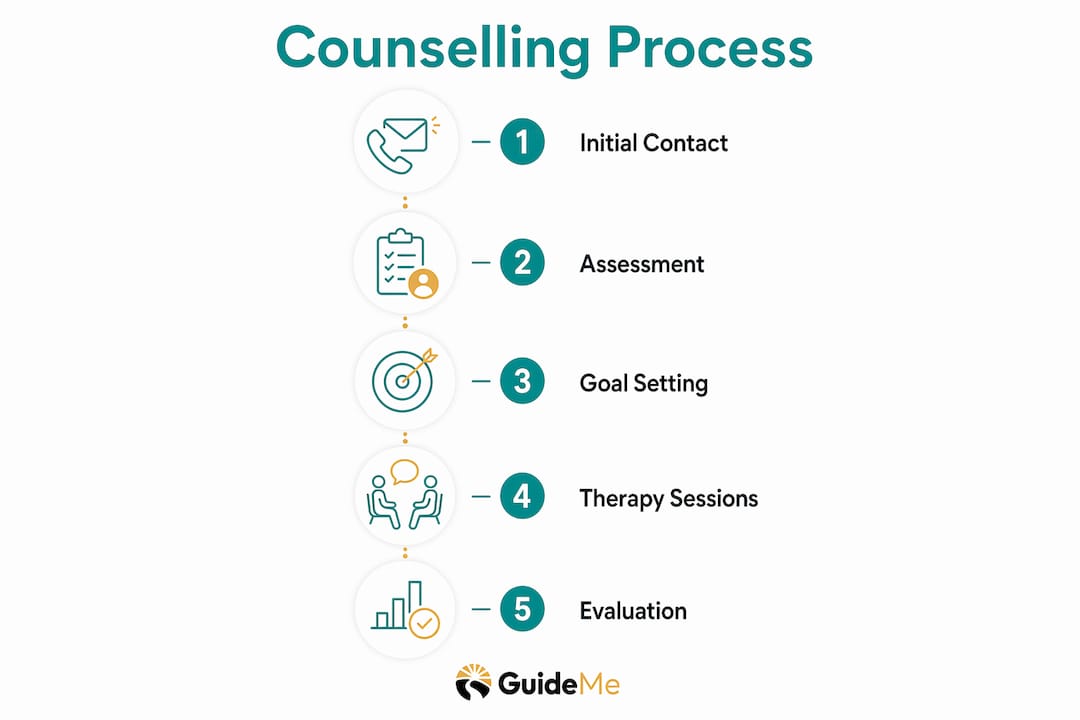
The counselling process follows a clear structure, even though the content of each session is personal and flexible.
-
Initial assessment and intake. The first session functions as a clinical assessment. The counsellor gathers your mental health history and current concerns, asks about your goals, and begins to understand the context of your life. This session is not passive. You are an active participant from the start, and the information you share directly shapes the direction of your care.
-
Collaborative goal setting. After the intake, you and your counsellor set measurable treatment goals together. These goals give the work direction and give you a clear sense of what progress looks like. Goals are not fixed. They can be revised as your circumstances or priorities change.
-
Ongoing sessions using evidence-based approaches. Counsellors draw on a range of therapeutic methods tailored to your needs. Common approaches include Cognitive Behavioural Therapy (CBT), Dialectical Behaviour Therapy (DBT), and person-centred therapy. CBT helps you identify and change unhelpful thought patterns. DBT builds skills for managing intense emotions. Person-centred therapy prioritises your autonomy and self-directed growth. The approach your counsellor uses will depend on your goals, your history, and what the evidence suggests works best for your situation.
-
Progress review and plan adjustment. Counsellors document progress and regularly reassess treatment plans with clients. This is not a formality. It means your care stays responsive to where you actually are, not where you were when you started. If something is not working, the plan changes.
-
Coordination with other providers. When needed, counsellors work alongside psychiatrists, GPs, and other healthcare professionals to ensure your care is joined up. This is particularly relevant if you are managing a condition that requires both therapeutic and medical support.
The length of counselling varies. Some people benefit from six to twelve sessions focused on a specific issue. Others engage in longer-term work. The duration is determined by your goals and your progress, not by a fixed schedule.
What are the main benefits of professional counselling?
Professional counselling provides a confidential, supportive environment that produces measurable improvements across several areas of life. The benefits are not limited to people in crisis. Counselling is equally valuable as a proactive investment in your emotional wellbeing.
The core benefits include:
- Improved self-awareness. Counselling helps you understand your own patterns of thought, emotion, and behaviour. That understanding is the foundation for lasting change.
- Emotional intelligence. Working with a counsellor builds your capacity to recognise, name, and manage your emotions. This skill improves every relationship you have.
- Practical coping tools. Counsellors teach concrete strategies for managing stress, anxiety, and difficult situations. These are skills you carry with you long after sessions end.
- Stronger relationships. As you develop self-awareness and communication skills in counselling, the quality of your personal and professional relationships tends to improve.
- Proactive mental health maintenance. Counselling is not only for crisis intervention. Engaging with counselling before problems become acute is one of the most effective things you can do for your long-term mental health. Think of it the way you think about physical health: regular attention prevents larger problems later.
The benefits of counselling also extend to specific life contexts. People managing financial stress, career pressures, grief, or relationship breakdown all report meaningful gains from structured therapeutic support. The evidence consistently shows that the therapeutic relationship itself, the quality of the connection between you and your counsellor, is one of the strongest predictors of positive outcomes.
Counselling also reduces the stigma of seeking help. Each time you engage with your mental health proactively, you normalise the practice for yourself and for those around you. That cultural shift matters as much as the individual benefit.
Pro Tip: If you are considering counselling for the first time, starting before a crisis gives you more time and mental space to engage fully with the process. Early engagement consistently produces better outcomes.
Key takeaways
Professional counselling is a formal, evidence-based practice delivered by qualified, licensed practitioners who use structured therapeutic methods to support mental health, personal growth, and lasting change.
| Point | Details |
|---|---|
| Formal qualification required | Counsellors hold a master's degree from a CACREP-accredited programme and must meet licensure requirements. |
| Structured process | Sessions follow a clear arc: intake, goal setting, evidence-based therapy, and regular progress review. |
| More than crisis support | Counselling is a proactive tool for wellbeing, not only a response to acute mental health difficulties. |
| Evidence-based methods | Approaches such as CBT, DBT, and person-centred therapy are selected and tailored to each client's needs. |
| Confidential and client-led | The therapeutic relationship is governed by professional ethics, giving clients a safe space to lead their own growth. |
What I have learnt from watching people engage with counselling
People often arrive at counselling with a fixed idea of what it will look like. They expect to be told what to do, or they worry they will be judged for what they share. Neither happens in good counselling. What actually happens is quieter and more gradual than most people expect.
The most common misconception I encounter is that counselling is only for people who are seriously unwell. That belief stops a lot of people from getting support they would genuinely benefit from. Counselling is for anyone who wants to understand themselves better, manage stress more effectively, or work through something that feels stuck. The threshold is not a diagnosis. It is simply a desire to engage.
One thing I would tell anyone preparing for their first session: you do not need to arrive with a clear problem statement. The counsellor's job is to help you find clarity, not to receive a perfectly articulated brief. Come as you are. The structure of the process will do the rest.
I also think the matching process matters more than most people realise. The quality of the relationship between you and your counsellor is the single biggest factor in whether counselling works. Getting that match right from the start saves time, reduces frustration, and makes the work feel less like an effort and more like a genuine conversation. If the first counsellor you see does not feel right, that is not a failure. It is information. Act on it.
— Yetty
Finding the right counsellor with Guidemetherapy
Knowing what professional counselling involves is one thing. Finding the right counsellor for your specific needs is another challenge entirely.
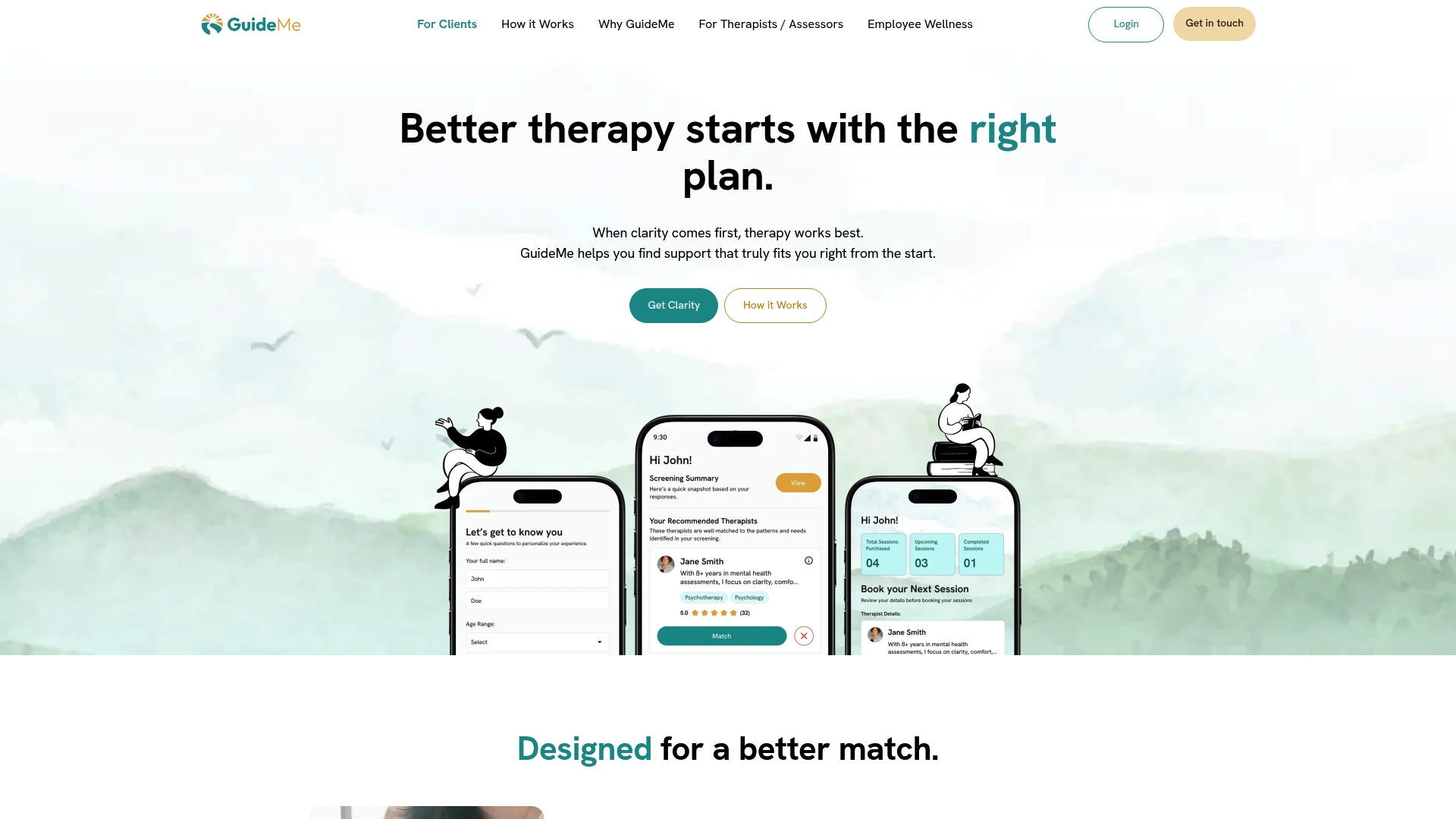
Guidemetherapy is a therapy navigation platform that takes the uncertainty out of that search. It combines human expertise with AI-powered matching to connect you with a qualified counsellor who fits your goals, preferences, and circumstances from the very beginning. Rather than leaving you to sift through directories or make uninformed choices, Guidemetherapy builds you an in-depth therapy plan and guides you to the right professional. If you are ready to take the next step, visit Guidemetherapy to get matched with a counsellor who is right for you.
FAQ
What is the definition of professional counselling?
Professional counselling is a formal, structured therapeutic relationship in which a qualified practitioner uses evidence-based strategies to help clients achieve mental health, wellness, and personal growth goals. The American Counseling Association defines it as a practice that empowers diverse individuals through clinical skill and ethical commitment.
What qualifications does a professional counsellor need?
Professional counsellors hold at least a master's degree from a CACREP-accredited programme and must meet state or national licensure requirements, including supervised clinical hours and a certification examination.
How does counselling differ from psychotherapy?
Counselling focuses on growth, adjustment, and preventive wellbeing, while psychotherapy typically addresses more complex or long-standing psychological conditions. In practice, the two overlap, and many practitioners are trained in both.
What types of professional counselling are available?
Common types include individual counselling, group therapy, couples counselling, and specialist services such as bereavement, career, or trauma counselling. The right type depends on your goals and circumstances.
How long does professional counselling take?
The duration varies by individual. Some people complete a focused course of six to twelve sessions. Others engage in longer-term work. Your counsellor will review progress regularly and adjust the plan to reflect where you are.