

TL;DR:
- Behavioral therapy is a structured approach that aims to modify maladaptive behaviors affecting daily functioning. It relies on evidence-based techniques like CBT, DBT, exposure therapy, and ABA to produce lasting change through measurable goals and client involvement. Finding a trusted therapist is crucial, and platforms like Guidemetherapy help match clients with suitable professionals for effective treatment.
Behavioural therapy is defined as a structured, action-oriented approach to mental health treatment that targets and modifies maladaptive behaviours affecting daily functioning and well-being. The formal clinical term is behaviour therapy, though cognitive behavioural therapy (CBT) is now the most widely practised model. Behavioural therapy works by replacing unhelpful habits and reactions with productive ones through goal setting, skill practice, and consistent monitoring. It is used extensively in mental health and addiction treatment, and its methods are grounded in decades of clinical research. If you are trying to understand what behavioural therapy involves before taking your first step, this guide covers the core principles, main techniques, session expectations, and documented benefits.
What is behavioural therapy and how does it work?
Behavioural therapy is built on one central idea: behaviour is learned, and what is learned can be changed. Rather than focusing on unconscious drives or childhood memories, it directs attention to the present. The therapist and client work together to identify specific behaviours that cause distress, then apply practical techniques to change them.

The process is systematic. Sessions involve identifying problem behaviours, setting measurable goals, practising new skills, and reviewing progress over time. This structure makes behavioural therapy one of the most evidence-based approaches in mental health care. Meta-analyses of 375 trials confirm that behavioural therapies significantly reduce mental health symptoms across diverse populations. That scale of evidence is rare in psychological research.
Behavioural therapy also places real responsibility on the client. Skills practised in sessions are meant to be applied outside them. This is not passive treatment. It is a collaborative process where you gradually build the tools to manage your own mental health.
What are the main types and techniques?
Behavioural therapy is not a single method. It is a family of approaches, each suited to different needs and conditions.
Cognitive Behavioural Therapy (CBT) is the most researched model. CBT combines cognitive reframing with behavioural change to reduce distress and improve functioning. It teaches people to recognise how their thoughts influence their actions, then challenges unhelpful thought patterns. CBT is applied widely for anxiety, mood disorders, and trauma-related conditions.
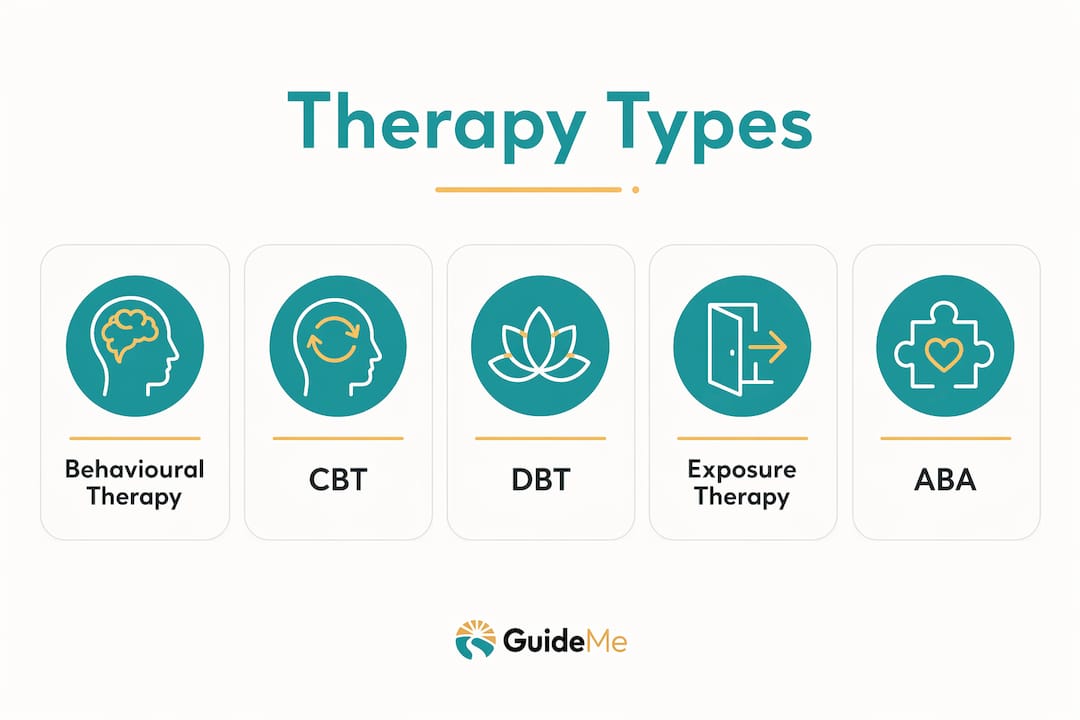
Dialectical Behaviour Therapy (DBT) focuses on emotional regulation. It was originally developed for borderline personality disorder but is now used for self-harm, eating disorders, and chronic emotional dysregulation. DBT combines individual therapy with group skills training.
Exposure Therapy works by gradually confronting feared situations or stimuli. Exposure therapy manages anxiety by reducing the fear response through repeated, controlled contact with the source of distress. It is the gold-standard treatment for phobias and post-traumatic stress disorder.
Applied Behaviour Analysis (ABA) reinforces positive behaviours through reward and repetition. It is used primarily for developmental conditions such as autism spectrum disorder.
| Type | Core focus | Best suited for |
|---|---|---|
| CBT | Thoughts and behaviour | Anxiety, depression, trauma |
| DBT | Emotional regulation | Borderline personality, self-harm |
| Exposure therapy | Fear confrontation | Phobias, PTSD, OCD |
| ABA | Behaviour reinforcement | Autism, developmental disorders |
Pro Tip: If you are unsure which type fits your situation, a therapy assessment can clarify which approach aligns with your specific goals and history before you commit to a therapist.
What to expect in sessions
Most people arrive at their first session not knowing what will happen. The reality is more straightforward than most expect.
Initial sessions last 50–60 minutes and focus on intake, history gathering, and building a sense of safety. The therapist will ask about your reasons for seeking help, your background, and what you hope to achieve. There is no pressure to solve anything in the first session. Understanding the therapy intake process beforehand can make that first appointment feel far less daunting.
The therapeutic alliance is the collaborative, trusting relationship between client and therapist. Research identifies it as the strongest predictor of successful therapy outcomes, surpassing technique or credentials. That means the quality of the relationship matters more than which specific method your therapist uses.
Here is what early sessions typically involve:
- Sharing your reasons for attending and what you want to change
- Discussing relevant personal history and current circumstances
- Agreeing on initial goals with your therapist
- Learning about the approach your therapist will use
- Beginning to identify patterns in your thoughts, feelings, and behaviours
Feeling emotionally unsettled after early sessions is normal. It reflects genuine engagement with the process, not a sign that something has gone wrong. Clients who set clear therapy goals from the outset tend to make faster, more measurable progress.
Pro Tip: Write down two or three specific situations you want to handle differently before your first session. Concrete examples give your therapist a clear starting point and help you both focus quickly.
What are the benefits of behavioural therapy?
The evidence base for behavioural therapy is one of the strongest in mental health research. Behavioural therapies are effective for depression, anxiety, OCD, eating disorders, and chronic illness management, with durable results confirmed across decades of research.
The practical benefits extend beyond symptom reduction. Clients develop skills they carry into daily life long after therapy ends. Anxiety, mood disorders, substance use, and obsessive-compulsive conditions all respond to consistent goal setting and skill rehearsal. These are not temporary fixes. They are learned responses that replace old, unhelpful ones.
Behavioural therapy also produces measurable change. Progress is tracked against specific goals, which means both client and therapist can see what is working. This transparency builds confidence and keeps the process focused. The empirical focus on measurable change is what distinguishes behavioural therapy from approaches that rely on insight alone.
For people managing anxiety specifically, the combination of CBT and exposure techniques produces some of the most consistent outcomes in clinical literature. Gradual exposure reduces avoidance, and cognitive reframing reduces the catastrophic thinking that fuels anxiety cycles.
How does behavioural therapy differ from other approaches?
Behavioural therapy is distinct because it focuses on observable, measurable change rather than interpretation or insight. Psychoanalytic approaches, for example, explore unconscious processes and early life experiences as the primary route to change. Behavioural therapy does not dismiss those factors, but it does not make them the centre of treatment.
Behavioural therapies shift focus from unconscious processes to collaborative, practical change. The goal is for clients to become their own therapists over time. Skills are taught explicitly, practised deliberately, and applied independently. This is a fundamentally different model from one where the therapist interprets and the client listens.
The action-orientation also changes how progress feels. In behavioural therapy, you notice change through what you do differently, not just through how you feel about the past. That shift is particularly useful for people who want concrete results and a clear sense of direction in their treatment.
Understanding the role of a therapist in this model helps set realistic expectations. The therapist is a guide and a teacher, not an authority who holds all the answers.
Key takeaways
Behavioural therapy is the most evidence-backed approach to mental health treatment, combining structured techniques, measurable goals, and a collaborative client-therapist relationship to produce lasting change.
| Point | Details |
|---|---|
| Core principle | Behavioural therapy targets learned behaviours and replaces them with healthier responses. |
| Main types | CBT, DBT, exposure therapy, and ABA each address different conditions and needs. |
| Session structure | Initial sessions focus on intake and goal-setting, not immediate solutions. |
| Evidence base | Meta-analyses of 375 trials confirm significant symptom reduction across diverse populations. |
| Client role | Clients practise skills between sessions and gradually learn to manage their own mental health. |
What I have learned about starting behavioural therapy
I have spoken with many people who delayed starting therapy because they did not know what to expect. The uncertainty itself became the barrier. What I find most striking is how often people assume they need to arrive with everything figured out. They do not.
The therapeutic alliance matters more than most people realise before they start. Finding a therapist you trust is not a luxury. It is the foundation that makes every technique more effective. If the rapport is not there after a few sessions, reassessing is not failure. It is good clinical sense. Strong therapist-client rapport is as important as the method itself.
The other thing worth saying plainly: feeling worse before you feel better is common in early behavioural therapy. Naming difficult patterns and sitting with them takes effort. That discomfort is evidence the work is real. The people who stay with it, who practise the skills and keep showing up, are the ones who see lasting change.
— Yetty
Finding the right therapist with Guidemetherapy
Starting behavioural therapy is a significant step, and finding the right therapist makes all the difference to how that experience unfolds.

Guidemetherapy is a therapy navigation platform that combines human expertise with AI-powered matching to help you find a therapist suited to your specific needs. Rather than leaving you to search alone, it creates an in-depth therapy plan based on your situation and connects you with a therapist who fits. The process is designed to reduce the confusion that often surrounds starting therapy, so you arrive at your first session with clarity and confidence. Start your therapy plan with Guidemetherapy and get matched with the right therapist from the beginning.
FAQ
What is the difference between behavioural therapy and CBT?
Behavioural therapy is the broader category. CBT is a specific type within it that combines cognitive reframing with behavioural techniques, making it the most widely used and researched model.
How long does behavioural therapy last?
The duration varies by condition and individual progress. Short-term CBT programmes typically run for 12–20 sessions, though more complex presentations may require longer treatment.
Is behavioural therapy effective for anxiety?
CBT and exposure therapy are among the most effective treatments for anxiety disorders. Clinical evidence consistently shows significant symptom reduction through structured goal-setting and graduated exposure exercises.
What happens in the first behavioural therapy session?
The first session focuses on intake and history gathering. It lasts approximately 50–60 minutes and is designed to build safety and understanding rather than deliver immediate solutions.
Do I need a diagnosis to start behavioural therapy?
A formal diagnosis is not required to begin therapy. Many people start with a general sense that certain thoughts or behaviours are affecting their quality of life, and the assessment process helps clarify the focus from there.